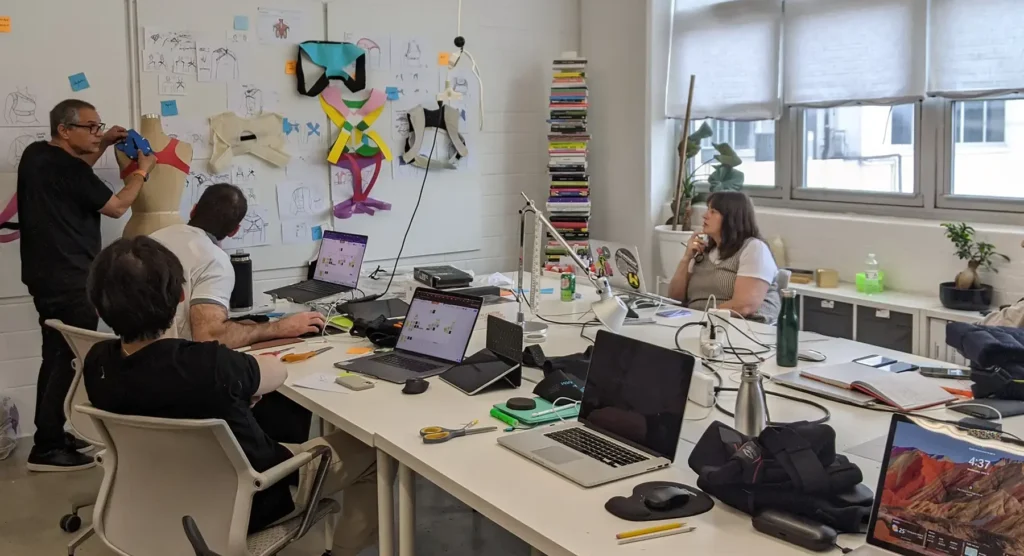
A Q&A with Chamille Thayer, Industrial Designer and Educator: Navigating Empathetic Engineering and Industrial Realities

A Q&A with Chamille Thayer, Industrial Designer and Educator: Navigating Empathetic Engineering and Industrial Realities

Spotlight articles shine a light on designers, engineers, researchers, and creative thinkers we admire and the ideas shaping design today.

Chamille Thayer standing outdoors next to a motorcycle, wearing a leather jacket, on a sunny day.
Chamille Thayer, industrial design educator at Pratt Institute and design engineer with over a decade of experience in corporate R&D

This month, we’re turning to industrial design education and practice with a provocative question: How do we balance human empathy, technical rigor, and the massive economic forces of mass production?

We spoke with Chamille Thayer, industrial design educator at Pratt Institute and seasoned design engineer with over a decade in corporate R&D at Estée Lauder. Chamille brings the seasoned perspective of an active practitioner and relentless advocate for manufacturability to the classroom.

Our conversation ranged from the delicate balance between physical needs and emotional wants to the hidden corporate politics behind industrial manufacturing. We talked about how digital tools and AI affect tactile intuition, why true empathy requires personal vulnerability, and what it really takes to navigate “industrial realities” without losing a product’s soul.

Q:

You’ve engineered products that meet physical needs, like mobility aids, as well as products for emotional wants, like beauty products. Does empathy for a “need” require a different instinct than empathy for a “want”?

A:

It’s a question of the magnitude of the imperative. Designing to satisfy an unmet, foundational need, like a walker that allows someone to ambulate without assistance, is where we start. Without that product, the person cannot walk without assistance. The need is met once the product exists.

When a landscape of products already satisfies that core need, design shifts toward “wants”: styling, single-handed folding, or extra storage. We’re obliged to encompass a broader set of user wants to distinguish a product in the marketplace.

The designer sits at the hub of the wheel, and the spokes of obligation reach out to manufacturing, marketing, regulatory agencies, the user, and the environment. All of those need to be satisfied and synthesized in the center by the designer. While there’s an opportunity for designers to add a piece of themselves, I tell my students that should be the last five percent of the solution. Design is like Thanksgiving dinner: you make sure every single guest is completely full and satisfied before you make a plate for yourself.

Q:

What is a memorable design “failure” that taught you a hard lesson about human behavior and empathy?

A:
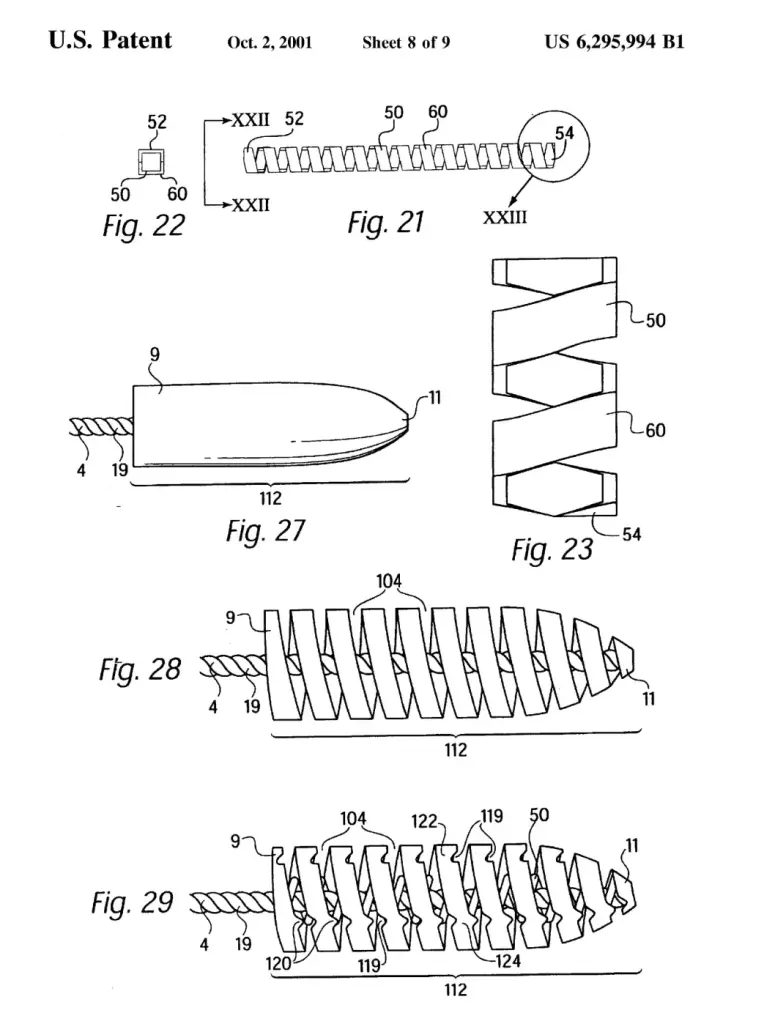
Technical line drawings from U.S. Patent 6,295,994 B1 issued October 2, 2001, displaying cross-sectional mechanical diagrams (Figures 21, 22, 23, 27, 28, and 29) of a flexible applicator design.
Technical patent drawing (US 6,295,994 B1) illustrating structural mechanics, flexible cross-sections, and ergonomic detailing for an innovative applicator design.

In research and development at Estée Lauder, over 90% of what we invented never made it to market. But one specific lipstick mechanism project stands out. We designed a propel-repel mechanism that reduced manufacturing costs from $0.27 to $0.17 per unit. When a company gives away 50 million units a year as gift-with-purchase, saving a dime per unit is a massive $5 million cost saving.

I worked for five years on that project, qualifying tooling, solving engineering hurdles, traveling back and forth to France, and testing filling lines. When we finally had a viable product, purchasing went back to our primary supplier, who had just invested $4 million automating their existing assembly line, and demanded an 8 cent price drop on their existing case, threatening to switch to our new design. The supplier folded and dropped their price.

Our product never launched. The company got the cost savings using our innovation as a bargaining chip, but our technology was shelved. The lesson? The magnitude of economic realities at an industrial scale is an unstoppable force. It’s not the polite suggestion of economics, it’s the law of economics. Products must be economically sustainable within the actual systems that build them.

Q:

Engineers often get a bad rap for focusing on specs over empathy. As a designer with strong mechanical savvy, how do you bridge that gap when working alongside them?

A:

An industrial designer must be a competent engineer conceptually. Engineers are constantly looking for the less expensive, more efficient solution. If you want a rectangular volume, an engineer might prefer 45 degrees of draft so it pops out of the mold instantly and stacks easily. But now you have a trapezoid, not a rectangle.

To bridge that gap, you need baseline credibility. Go to the manufacturer with a great technical drawing. A clean, accurate drawing gives you instantaneous credibility: it proves you know what you’re talking about and that your request is reasonable.

From there, pick your fights. You can’t fight across the entire landscape of a product. Understand your hierarchy of what actually matters. I once designed a mascara brush that used a threaded stainless steel spring to bypass a competitor’s patent. I arbitrarily set a microscopic tolerance without realizing how hard it was for manufacturing engineers to hold. Instead of telling me, they put workers on the line manually inspecting and turning every piece, which blew up our costs. You have to know what is worth fighting for and where you can yield so engineers trust you when it counts.

Q:

You’re known for being tough and exacting about manufacturability. Does a concept usually lose some of its freshness by the time it survives the engineering and manufacturing process?

A:

Absolutely. There is a dream of the product, and you have to understand what is at the heart of that dream. Students often struggle because they have three good ideas and are convinced their product should do all three, when really, those should be three separate products.

When you’re designing something and planning multiple innovations, you have to be clear: if you can only keep three, what are they? If you can only keep two? If you can only keep one, what is the single thing this product has to do? Constraints are real. Everyone has a dream, but if you can’t propose a realistic path to execution, you don’t actually have a design. That’s the difference between fiction and design.

Q:

In prosthetics and body-adjacent devices, what’s a mechanical decision that seems purely technical on paper but actually changes how someone feels about their own body?

A:

In the realm of seen objects, nothing is a purely mechanical choice. Psychology and identity are embedded in everything, especially when amending a human body.

Some people want a prosthetic arm that is completely indistinguishable from their natural arm; others want an aesthetic that has no visual relationship to a human limb at all. I personally believe there is far too much styling masquerading as design intended to disguise or hide the truth of what an object is.

Look at 1930s car engines: the carburetors were polished, the wire arrangements were minimalist and artful, and every functional element was beautifully composed. Today, engines are hidden under a molded piece of plastic that mimics a valve cover to disguise an engineering mess of wires and hoses underneath. Conversely, look at custom gaming PCs: people build liquid-cooled systems with transparent cases and backlighting, celebrating function as art. We should be celebrating the possibilities of beauty in functional mechanics rather than hiding them under shrouds.

Q:

How do you teach students to step outside their own body and habits when designing for someone whose needs or wants are completely different from their own?

A:

You can’t teach it in a vacuum. You have to get the student in direct contact with a real user, and they have to be willing to be wrong. Being wrong often is an absolute prerequisite for good design.

I had a student who wanted to design a prosthetic hand for a musician. He tracked down a professional drummer in California who had lost his hand in a fireworks accident. They collaborated all semester, measuring the residual limb remotely and refining the mechanism. At the end of the term, the drummer flew out to Pratt with his drum kit, tried on the custom prosthetic, and was able to execute drumming techniques he couldn’t perform with his commercial device.

Good designers find real users, talk to them directly, and stay open to having their assumptions shattered.

Q:

When a project is completely foreign to your own experience, how do you summon empathy for that user?

A:
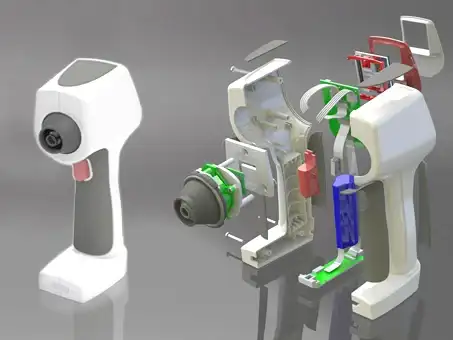
3D CAD visualization showing a fully assembled white and grey ergonomic hand-held spectrophotometer alongside an exploded assembly view revealing internal PCBs, battery, optics module, display bezel, and housing architecture.
Ergonomic design and internal engineering layout for Datacolor’s hand-held spectrophotometer, featuring a self-adjusting optical read head and balanced housing for precise industrial color measurement.

Firsthand, un-curated observation is essential. The designer has to walk out of the office and observe the world directly.

If you want to understand the problems of subway stairs, go sit in the subway for an afternoon every day for a week. Watch someone try to navigate the stairs with a baby carriage, a laundry cart, and a musical instrument. Watch a street vendor set up their table and realize it takes them two hours to set up, two hours to tear down, and an hour of travel each way: that’s six hours of logistics before an eight-hour workday.

Once you observe that 14-hour day, you realize that streamlining their setup could radically improve their life. Ethnographic research, direct observation, and speculative narrative (constructing narrative stories about why someone needs an object) are the foundational skills of empathy.

Q:

If a designer is looking to become genuinely more empathetic in their practice, what are some personal habits or inner work they need to do?

A:

Real empathy starts by understanding your own feelings: your own joy, your own failures, and your own ego. You can’t ignore empathy in your personal life and then simply turn it on as a designer when you walk into the studio. That isn’t empathy; at best, it’s sympathy, which is just feeling bad for someone rather than sharing what they feel.

Design is an intensely mental exercise deeply attached to our own ego and fear of failure. If you are bound by your reputation or fear of looking foolish, you cannot design freely or connect authentically with others. The centeredness and self-awareness you cultivate as a person directly dictate your freedom and capacity as a designer.

Q:

You introduced 3D CAD and digital fabrication to Pratt in the late ’90s. Now that digital workflows move even faster, do young designers still understand materials and physics as intuitively as they used to?

A:
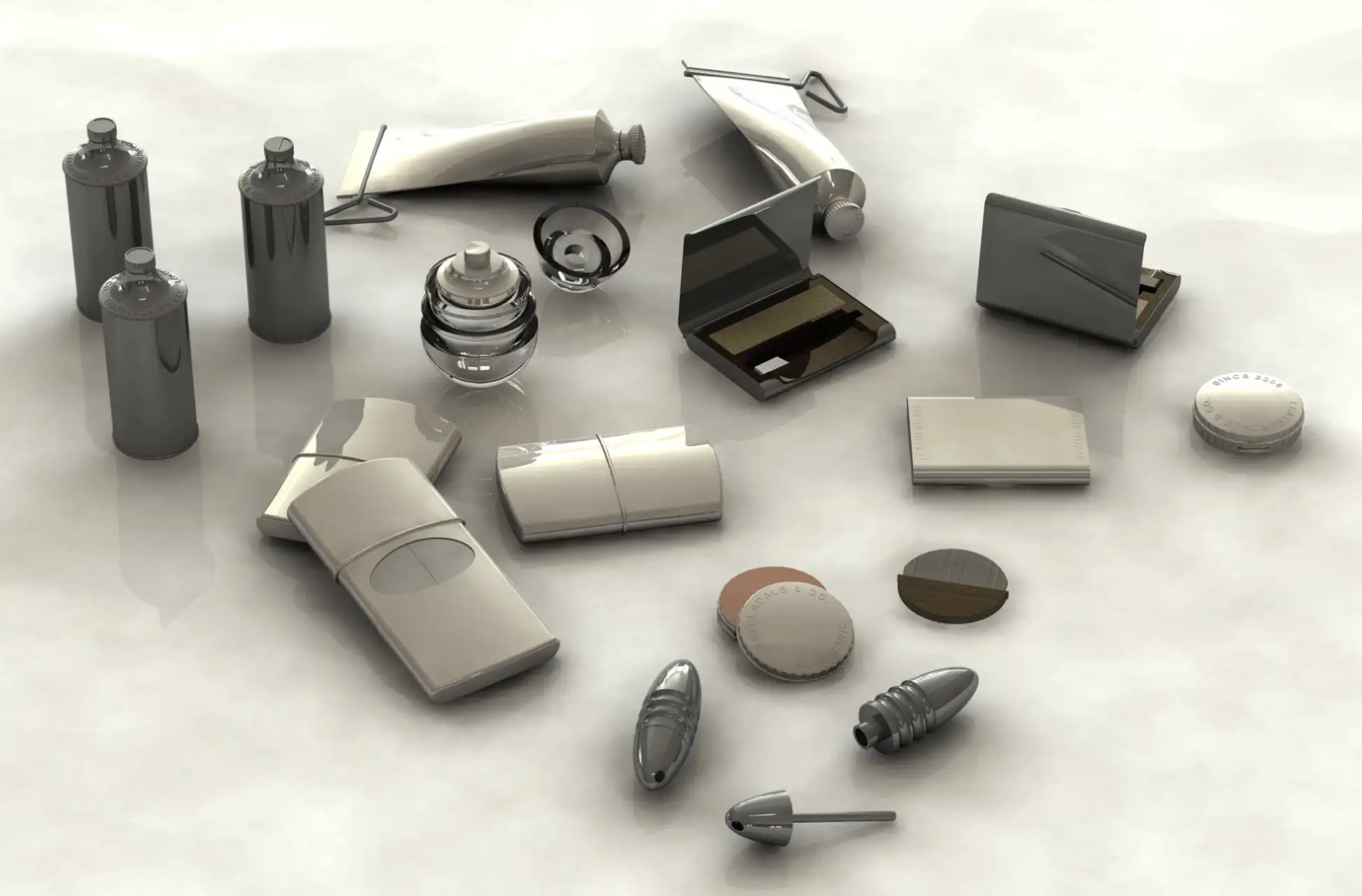
A collection of 3D computer-rendered metallic and silver product designs, including cosmetic compacts, squeeze tubes, aerosol spray cans, and ergonomic personal care packaging resting on a light neutral surface.
Product design exploration and 3D concept renders showcasing sleek metallic packaging and ergonomic forms developed by industrial designer Chamille Thayer.

In the early days, digital tools freed us from an unhealthy emotional attachment to physical artifacts. If you spent six hours hand-sanding a mahogany model and a professor told you to make it 10% larger, you were crushed because you couldn’t just add wood back. Digital output allowed us to iterate without that emotional paralysis.

Today, 3D printing is so ubiquitous that we see the opposite problem: zero physical investment and a loss of unconscious, intuitive decision-making. When you bend a wire with pliers, your eye measures the curve, your hands feel the tension, and you make dozens of sophisticated aesthetic choices without calculating an exact 26.7° angle.

In CAD, a user spends 30% to 50% of their cognitive energy managing the logistics of the software rather than exploring the idea. When you hold a pencil, you’re 98% in the idea. Digital tools offer a faster, less time-consuming path, but often, it becomes a faster path to poorer ideas.

Q:

With AI tools becoming more prevalent in the studio, how will this affect the role of empathy in design and our ability to understand users?

A:

AI is a useful tool, but it has zero empathy: it has statistical probability.

When we encourage AI to lead, we do poorly. Asking AI what should exist or what people care about is a terrible plan. However, if you have designed six handle concepts and ask AI to analyze similar existing forms in the sports product market, that is a great use case.

Design is the experience of self in the world, and it’s the source of my greatest joy. Why delegate that to a bot? I need to catch my own mouse; I don’t want the cat’s mouse. Use technology as an accessory, but do the heavy lifting yourself. Go hunting for your own insights.

–

Check out the rest of our Spotlight series to hear more from leaders in the design industry. Sign up for our newsletter and follow us on Instagram and LinkedIn for design news, multi-media recommendations, and to learn more about product design and development!

A Q&A with James Rudolph, Industrial Design Educator and Founder of Rudolph Design Studio

A Q&A with James Rudolph, Industrial Design Educator and Founder of Rudolph Design Studio

Spotlight articles shine a light on designers, engineers, researchers, and creative thinkers we admire and the ideas shaping design today. This month, as students head back to school, we’re turning to industrial design education with a provocative question: Are we teaching young designers the right things?

James Rudolph, Assistant Professor of Industrial Design at the University of Notre Dame and founder of Rudolph Design Studio, smiling in an outdoor headshot
James Rudolf, industrial design educator at the University of Notre Dame and founder of Rudolf Design Studio

We sat down with James Rudolph, Paul Down Assistant Professor of Industrial Design at the University of Notre Dame and founder and principal designer of Rudolph Design Studio. With more than 20 years of industry experience, James brings the perspective of an active practitioner to the classroom.

Our conversation ranged from AI-generated renderings to the enduring value of making, craftsmanship, and putting an idea into someone else’s hands. We talked about what students may be spending too much time learning, whether designers have become too focused on solving problems, and James’s growing interest in what he calls “speculative design for the real world.”

Q:

What’s one skill that students obsess over right now that you don’t think is going to matter as much in five years? And conversely, what’s one “old-school” skill that you think is going to become even more valuable?

A:

A lot of students are obsessed with being able to render at a fidelity that creates engaging, compelling, interesting visuals. In the past, that was such an important skill. If you’re a young designer, your concepts get more attention if they’re visually compelling, have high contrast and perfect perspective, and integrate color, material, and texture in a compelling way.

Some students get stuck on that to the detriment of thinking about the gesture, the overall form, and the general first impression of a physical thing. AI can help young designers create stronger, more compelling visualizations. The designer, in turn, brings the critical thinking and analysis needed to give those visualizations meaning and direction.

Conversely, the more traditional industrial design skill of model making and physical making is an area where I think we could all use a little more time. It doesn’t have to be hand carving, but it has to be the ability to show your idea in a three-dimensional form and put it in somebody’s hand.

And it’s not only model making, but craftsmanship. People respond to craftsmanship. Taking the time to make well-crafted, low-fidelity mockups allows people to evaluate the things you want them to evaluate—the ergonomics, the gesture, the space it takes up, the volume—rather than looking at how poorly something is made.

Q:

Is industrial design education keeping pace with the profession—or is it still preparing students for a version of design that no longer exists?

A:

My research and practice are closely intertwined. I continue to work with industry clients, particularly in healthcare, where I collaborate with engineers, scientists, and researchers to understand people and their needs and bring that perspective to the development of critical technologies. Those experiences also shape my research, giving me an opportunity to reflect and write about the role design can play in advancing healthcare innovation.

Those challenges, processes, and methodologies that I practice are what I try to bring into the classroom. With younger students, I provide more constraints so they can learn some of the fundamentals. As they progress, I give them fewer constraints and more of a framework for the types of questions they should be answering and the work they should be doing from the beginning of a project through the end.

In some ways, I guess it’s going back to an apprentice-style model of education: learning through doing, learning through dialogue, learning through feedback, and learning through interaction with physical things.

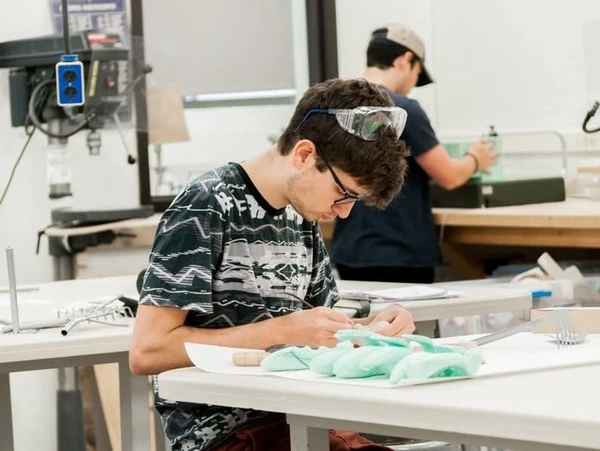
Industrial design student wearing safety goggles working on a project in a design studio workshop at the University of Notre Dame
Design student working on a project in West Lake Hall. Photo courtesy of the University of Notre Dame Department of Art, Art History, and Design.

Q:

Has making become optional? What role does physical making still play in industrial design education?

A:

For me, it’s still so critical. The act of making has obviously expanded.  When I was in school, it was about working directly with materials—shaping foam, building three-dimensional forms in the wood shop, and learning the fundamentals of form through craft. It meant creating physical objects you could hold, interact with, and put into other people’s hands.

That’s still so critical to industrial design and the physical world, but the ways in which we can make things has grown. Now we’re 3D printing a lot. You can iterate quicker, create quick mockups in CAD, and add more content to your models through displays or digital experiences.

I think making is absolutely critical. It’s part of our approach to research and understanding people. You learn by making in a couple of different ways. You learn yourself through a kind of dialogue with the three-dimensional object, and you respond as a designer to what you’re making. But the real power is being able to learn from others through your making.

Q:

Are we graduating designers who know how to make things—or designers who know how to present things really well?

A:

I think every school is a little bit different. Some schools are certainly doing a better job of making sure that the craft of design is still at the forefront of their curriculum. A lot of it has to do with the expertise of the faculty. We tend to teach what we know, so a lot has to do with the values of the different departments and what areas of design they want to highlight.

There are certainly programs that excel at really strong presentations and portfolios—the ability to tell a compelling narrative through the visual storytelling of their projects. There may be some truth to the trend that a lot of the content in those portfolios tends to be more rendering-heavy, more digital-heavy, and less prototyping-heavy.

But I still see a lot of portfolios that show early, low-fidelity prototyping. I love to see that. I think it’s still paramount to the way designers learn from their own mistakes.

Q:

How do you define design research, what impact does it have, and how might we encourage more students to become design researchers?

A:

For me, design research is really about understanding people: their needs, their wants, their desires. Then, if you move beyond that, thinking about people in terms of social dynamics, behavioral dynamics, and common cognitive things that you need to think through from a human factors perspective.

It’s understanding people within a context, and that means understanding what their common goals, activities, and tasks are. When we start a design research project in my class, it’s about understanding a group or groups of people that have a shared task, activity, or goal. 

At Notre Dame, we put a heavy emphasis on design research. In fact, one of the areas of feedback we sometimes receive is that we graduate students who almost have too much design research and less design refinement on the back end.

We start with an area of inquiry and go through the process of: What are the questions we have? How do we frame a research effort around that? What are some of the questions you might want to ask? What are some of the observations you might want to make? What type of people should you include to be more representative of a broader population?

Then, on the back end, how do you turn those observations into insights? How do you communicate what’s important—what you found that was interesting, compelling, and meaningful—to whoever your audience is?

Q:

Has industrial design become too focused on solving problems? Is there still room for work that’s speculative, poetic, or simply asks different types of questions?

A:

I certainly hope so. I grapple with this issue myself all the time. I have a real appreciation for speculative design work and for design work that is not intended only to inform products or practical things in your life. The idea of using the methods, skills, and tools of design to inform dialogue and debate has always been interesting to me. In fact, I wanted to be an artist originally. I went to school for fine art. So the idea of using the object to solicit or evoke dialogue and critical thinking is really compelling to me.

I think that’s a way to inspire students to think beyond practical objects or objects that are meant just to bring utility to your life—introducing projects intended to provoke, prompt, or incite dialogue. There’s this whole other world of design that takes place in art galleries, community settings, and social settings. Students can use their skills in more ways than just developing utilitarian products.

You also have the freedom not to design something. Maybe a product isn’t the right solution. Maybe it’s a system or service, or maybe it’s meant for a gallery or museum setting.

Q:

Everyone is talking about AI replacing designers. Is that the wrong question? Should we really be worried, or should we be excited?

A:

I struggle with AI a little bit because I haven’t found a way in my practice to use it successfully. I go to conferences and watch demonstrations of different workflows for incorporating AI into the design process, and at the end it’s like a coffee maker shrouded in camouflage. The forms don’t make sense and there’s no thought around the workflow or usability.

For more complex healthcare devices—wearables and things that have surgical robotics-like complexity—the results initially look compelling. They’re rendered very nicely, the forms look real, and they have compelling contrast and lighting. But I haven’t been able to use it in a way where I see real value. I can sit down with my partner and brainstorm 20 more reasonable, meaningful ideas. Maybe they’re not perfect or rendered very well, but they actually address the issues that we want to solve.

OneAir Medical and OneAir Environment handheld devices, healthcare and environmental monitoring products designed by Rudolph Design Studio
OneAir Medical and OneAir Environment devices, designed by Rudolph Design Studio.

It’s not to say that AI isn’t going to be there soon. I think it will become a great tool. But it won’t replace your ability to analyze and critique from a human perspective. I’m not scared. I’m frustrated with my own inability to use it successfully. It falls on me to continue to use the tools, understand the tools, and introduce them when I think they’re appropriate.

Q:

You mentioned speculative design earlier, and it’s clearly something you’re thinking about a lot. Where do you see speculative design fitting into the future of industrial design practice and education?

A:

One area that you might have seen me light up about is this idea of speculative design. Early in my career, my research was heavily focused on traditional ways of thinking about design: How do we better understand people’s needs? How do we define needs? How do we create procedures and processes to translate those needs into user-need statements and then into product requirements?

But my own research is going back to what I was more interested in as a student, which is this idea of speculative design. I’ve been rereading Victor Papanek’s Design for the Real World and also reading about speculative work, speculative everything, and discursive design. They often talk to each other as if they’re very different camps—speculative design on one side and traditional industrial design, where we make things useful, practical, and usable, on the other. 

Why do they have to be so different? I think there’s room for both, and both camps can learn from each other.  I’ve got this idea I’m calling “speculative design for the real world.” How do you leverage the methodologies and thinking of speculative design, and how can those things inform real-world initiatives—important societal and cultural initiatives?

When you think through the lens of speculative design, it opens up an entirely new range of possibilities for where the research might lead. You don’t have to constrain yourself to a thing. It could be an experience. It could be an exhibit. It could be a social initiative. It opens a lot of opportunities for different types of solutions that, as an industrial designer, you might not have thought of at the onset.

–

Check out the rest of our Spotlight series to hear more from leaders in the design industry. Sign up for our newsletter and follow us on Instagram and LinkedIn for design news, multi-media recommendations, and to learn more about product design and development!

Beyond Devices: The Future of Smart Textiles

Beyond Devices: The Future of Smart Textiles

For years, wearable technology has been defined by devices; watches, bands, clips, and sensors attached to the body. These products brought computing closer to us, but they remained distinct objects, layered onto daily life rather than fully integrated within it. Today, that boundary is beginning to dissolve. Advances in miniaturization, materials, and fabrication are enabling a new generation of wearable technology that is built directly into what we wear. Electronics are becoming so small, flexible, and adaptable that they can be embedded into fibers, yarns, and fabrics, transforming textiles into intelligent systems. In this emerging paradigm, clothing transforms from a passive to an active layer; capable of sensing, communicating, and supporting the body in real time.

At Interwoven Design, we operate at the intersection of soft goods, wearable technology, and human-centered design. Our team brings together expertise in textiles, engineering, and product development to translate complex technologies into wearable solutions that feel intuitive and natural. In this Insight article, we explore how smart textiles are redefining wearable technology, and the design challenges that come with embedding intelligence into fabric. We also examine IARPA’s SMART ePANTS program as a case study in how next-generation textile systems are being developed and what they signal for the future of wearable design across industries.

From Wearables to Woven Systems

Early wearable technologies succeeded by attaching intelligence to the body. Devices were clipped, strapped, or adhered, creating a clear distinction between the user and the technology. While effective, this approach introduced friction, both physical and cognitive. Devices had to be managed, charged, positioned, and maintained.

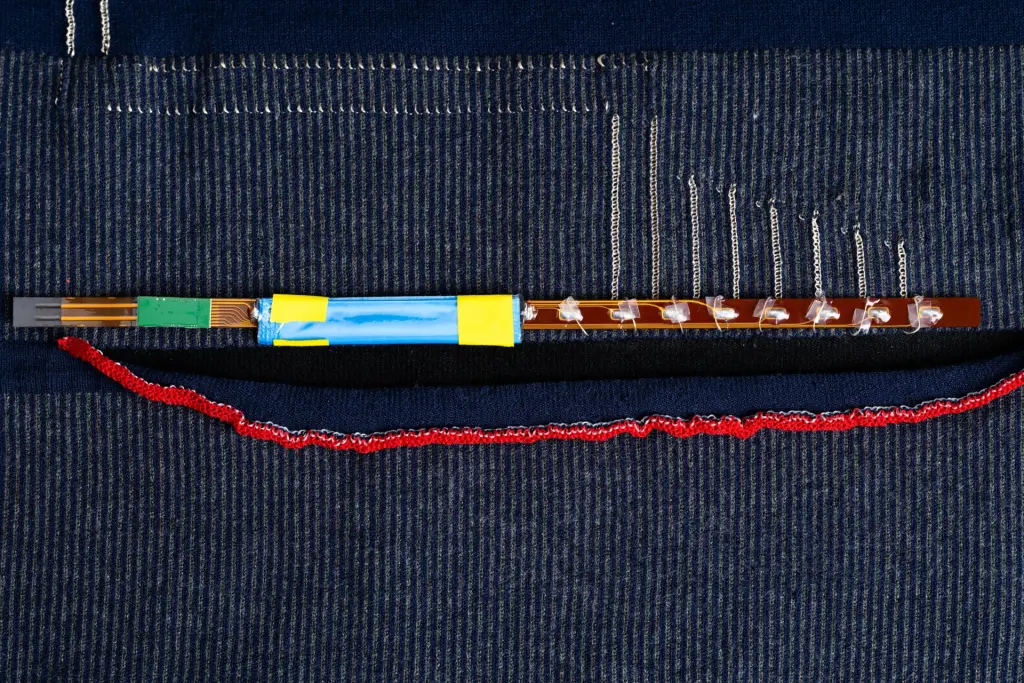
A flexible circuit with sensor pad, PCB, power module, and surface-mount components integrated into a knit textile alongside conductive threads and stitching, illustrating smart textile construction
Sensors, circuitry, and power integrated directly into the fabric. The electronics are not attached to the textile; they are part of it.

Smart textiles represent a fundamental shift away from this model. Instead of discrete objects, intelligence becomes distributed across the garment itself. Sensors, conductive pathways, and responsive elements are integrated into the fabric, allowing the entire system to function as a cohesive whole. The garment is no longer a carrier of technology; it is the technology.

This shift enables interaction that is continuous and embedded in daily life. Rather than engaging with a device, users inhabit a system. Clothing can sense movement, monitor physiological signals, respond to environmental changes, and communicate data without requiring direct input. At the core of this transformation is the rapid miniaturization of electronic components. Sensors, conductors, power sources, and processing units are shrinking to the point where they can be incorporated into fibers and yarns without compromising flexibility or comfort. Conductive threads can function as wiring, while micro-scale sensors can be embedded directly into the structure of a textile.

This evolution changes how designers think about materials. Electronics shift from separate components to be housed within a product to intrinsic properties of the material itself. A fabric can conduct, sense, heat, or transmit information, not because something has been added to it, but because it has been engineered to do so at a fundamental level. As a result, the role of design expands. Decisions about weave structure, fiber composition, and material layering become as critical as traditional considerations like form and enclosure. Designing a smart textile is not just about integrating technology, it is about orchestrating performance at the level of the material system.

The Challenges of Translation

For designers, the central challenge of smart textiles is not simply technical integration, it is experiential translation. Electronics and textiles are fundamentally different systems, governed by opposing constraints. One is rigid, precise, and sensitive; the other is soft, adaptive, and expected to endure constant movement, friction, and environmental exposure. Bridging these worlds requires more than embedding components into fabric; it demands rethinking how products are conceived from the ground up. Traditional product design often treats materials as a means of housing or protecting internal components. In smart textiles, the material is the system. Decisions about fiber composition, knit structure, layering, and seam construction directly impact not only comfort and durability, but also electrical performance. Stretch, for example, is no longer just a fit consideration, it affects conductivity, signal stability, and sensor accuracy. Similarly, the placement of seams or zones of tension can influence how reliably a system performs over time.

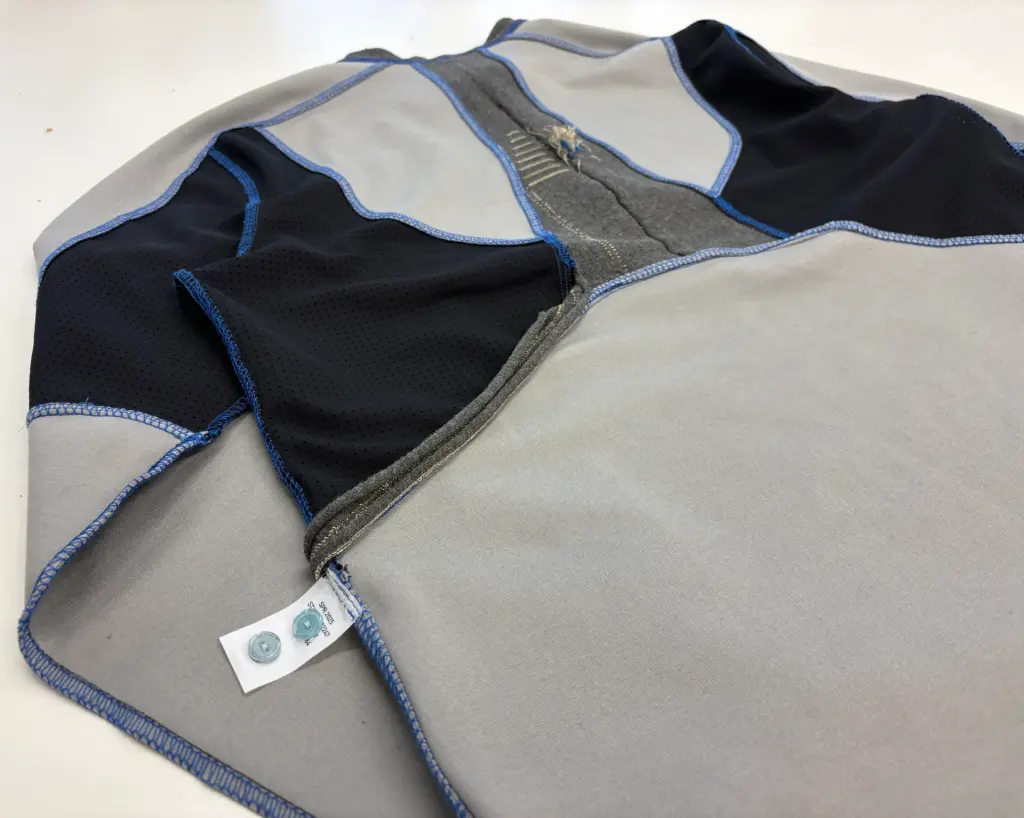
Inside view of an Interwoven concept garment for SMART ePANTS. Conductive channels follow the seams, making construction decisions inseparable from electrical performance.

Designing at this level introduces a new set of constraints that must be balanced simultaneously. A garment must stretch, but not in ways that compromise embedded circuits. It must be breathable, while still protecting sensitive elements from moisture. It must withstand washing, abrasion, and repeated wear cycles without degrading performance. Each of these requirements influences the others, creating a tightly interdependent system where small decisions can have cascading effects.

Durability and lifecycle are also notable challenges. Unlike traditional electronics, which are often treated as discrete, replaceable objects, smart textiles are expected to behave like clothing: washed frequently, worn in varied conditions, and maintained over time. Designers must consider how these products age, how components are protected or exposed, and what failure looks like. Does the garment continue to function if one element degrades? Can it be repaired, or is it disposable? These questions push design beyond form and function into systems thinking.

Equally important is the user experience. Smart textiles must feel indistinguishable from traditional garments, even as they perform complex functions. This requires careful attention to weight, drape, texture, and fit. Hard points, bulk, or inconsistencies in material can quickly break the illusion, reminding the user that they are wearing a device rather than clothing. The goal is to achieve a level of integration where the technology disappears; where the garment behaves exactly as expected while quietly delivering enhanced capability. Designers must also consider how to communicate functionality through material, form, and experience. Feedback may come through changes in temperature, pressure, or texture rather than visual interfaces. The product must feel reliable and intuitive, even when its most advanced features are hidden from view.

Designing smart textiles is an exercise in reconciliation. It requires aligning the precision of electronics with the fluidity of textiles, the demands of performance with the expectations of comfort, and the complexity of systems with the simplicity of everyday use. 

Case Study: SMART ePANTS

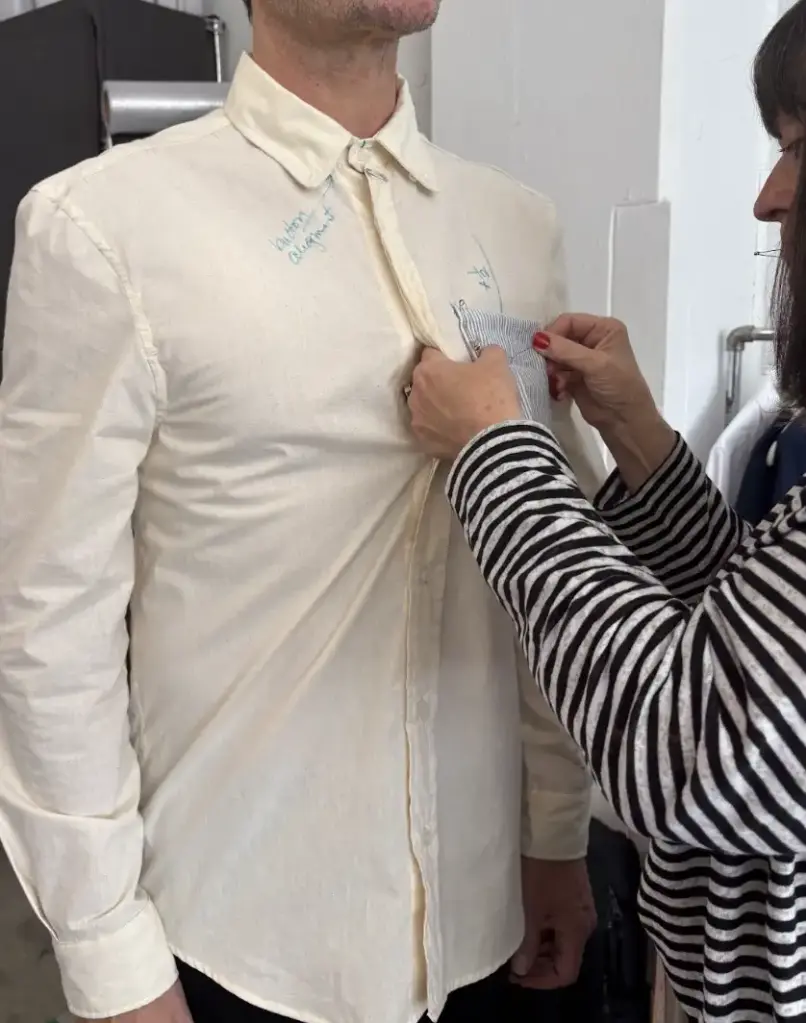
An Interwoven designer adjusting the fit of a cream-colored shirt on a fit model during a SMART ePANTS garment development session
A fit model session for an Interwoven garment developed for the SMART ePANTS program, where pattern and fit are refined to keep embedded technology comfortable and unobtrusive in wear.

One of the most ambitious explorations of this concept is the SMART ePANTS program, developed by the Intelligence Advanced Research Projects Activity (IARPA). The initiative focuses on creating fully integrated textile systems: garments that incorporate sensing, power, computation, and communication directly into the fabric.

The goal of SMART ePANTS is to develop clothing that can capture and process information about the wearer and their environment without relying on external devices. Sensors capable of detecting audio, movement, and location are woven into the garment, while conductive fibers act as wiring to connect these systems. Power is supplied through flexible, deformable energy solutions, and data is processed using ultra-low-power electronics embedded within the textile structure.

What distinguishes this program is not any single technology, but the level of integration. Rather than assembling components into a wearable device, SMART ePANTS treats the garment itself as a platform where every element, from fiber to system architecture, contributes to overall performance. The result is a product that maintains the look and feel of everyday clothing while functioning as a sophisticated technological system. This approach has significant implications for design. By embedding intelligence directly into textiles, the need for bulky hardware is reduced, and the user experience becomes more seamless. The garment can be worn naturally, without requiring adjustment or awareness, allowing technology to operate in the background.

From Research to Real-World Applications

While programs like SMART ePANTS are rooted in advanced research, their implications extend far beyond specialized applications. As these technologies mature, they will begin to influence a wide range of industries, from healthcare and wellness to performance apparel and everyday clothing, translating into applications that prioritize comfort, wearability, and seamless integration into daily life. The trajectory is familiar: high-performance, research-driven innovation gradually becomes refined, simplified, and accessible to broader audiences.

In healthcare, this shift is particularly evident. Garments designed for continuous physiological monitoring are moving away from rigid patches and adhesive sensors toward soft, wearable formats that can be worn over extended periods. For example, products like the Hexoskin Smart Shirt integrate sensors directly into the fabric to monitor respiration, heart rate, and activity without requiring additional devices. Similarly, platforms such as the Sensoria Smart Socks embed pressure sensors into knit structures to analyze gait and movement, demonstrating how everyday apparel can double as a data collection system without sacrificing comfort.

Performance apparel is another area where smart textiles are gaining traction. Brands are exploring garments that actively support the body through embedded functionality rather than external hardware. The Ralph Lauren PoloTech Shirt tracks biometric data and streams it to your device, while recovery-focused compression garments incorporate engineered fabrics that enhance circulation and muscle support. 

In wellness and lifestyle applications, smart textiles are becoming increasingly discreet and intuitive. Sleep-focused products, posture-correcting garments, and stress-responsive wearables are leveraging soft, flexible materials to deliver benefits without introducing friction into daily routines. Early-stage innovations, such as textiles that can subtly adjust temperature in response to the body or fabrics that incorporate haptic feedback for relaxation, point toward a future where garments play an active role in regulating comfort and well-being.

In industrial and safety contexts, smart textiles are moving beyond rigid equipment toward more wearable solutions. High-visibility clothing with embedded sensors can monitor worker fatigue or environmental conditions, while military and first-responder gear is beginning to incorporate distributed sensing systems that enhance situational awareness without adding bulk. 

Across these categories, a consistent pattern emerges: the most successful products are those that translate complex technology into familiar, wearable formats. Rather than introducing entirely new behaviors, they enhance existing ones, turning shirts, socks, and outerwear into platforms for sensing, response, and support. As the underlying technologies continue to mature, the distinction between “technology” and “textile” will become increasingly blurred, paving the way for products that feel less like innovations and more like natural evolutions of what we already wear.

The Future: Textile as Interface, System, and Platform

The future of smart textiles is one where the textile itself becomes the interface, the system, and the platform. Clothing will no longer be a static layer, but an active participant in how we experience the world: sensing, responding, and adapting in real time. For designers, this represents a fundamental shift in how products are conceived and developed. It requires thinking beyond objects and toward systems, beyond components and toward materials, and beyond interaction and toward experience. The challenge is to harness the potential of embedded intelligence while maintaining the qualities that make textiles inherently wearable: softness, flexibility, and comfort. The most successful solutions will not be those that showcase technology, but those that integrate it so seamlessly that it becomes invisible, leaving behind only the experience of wearing something that works effortlessly with the body.

At Interwoven Design, we partner with clients to navigate this evolving landscape, translating emerging technologies into products that balance innovation with usability. By integrating expertise in soft goods, textiles, and wearable systems, we help bring the next generation of smart textiles from concept to reality. 

Interwoven Design is a design consultancy that is positioned at the intersection of soft goods and wearable technology, creating products that function with the body and offer comfort as well as the superb performance that arises through the innovative incorporation of rigid, often electronic and responsive elements. Sign up for our newsletter and follow us on Instagram and LinkedIn for design news, multi-media recommendations, and to learn more about product design and development!

Beyond the Portfolio: Starting a Career in Industrial Design

Beyond the Portfolio: Starting a Career in Industrial Design

Product design is evolving rapidly. Across industries, the boundaries between physical products, digital experiences, and wearable systems are becoming increasingly fluid, creating new opportunities for designers. Designers today are expected to think beyond form alone, considering how products function within broader systems of manufacturing, interaction, human behavior, and experience.

For new graduates entering the field, this moment is both exciting and challenging. The range of possible career paths has expanded dramatically, but so have expectations. Many emerging designers find themselves asking the same questions: How do I stand out in a competitive market? What kind of portfolio do design firms actually want to see? How do I gain experience when most opportunities seem to require it already? Navigating the transition from school to industry can feel uncertain, particularly as the profession itself continues to evolve.

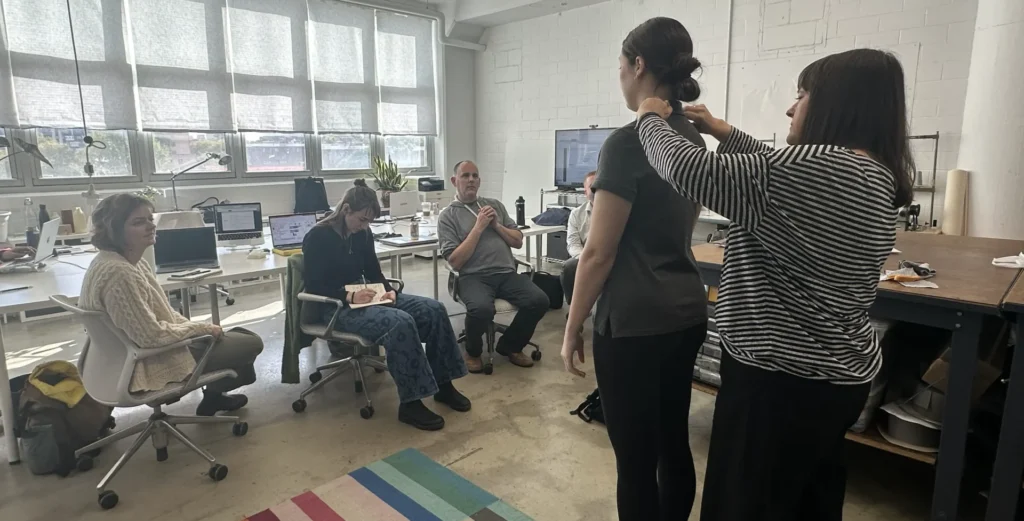
At Interwoven Design, we seek new industrial design interns every year, giving us a firsthand perspective on what differentiates successful candidates in today’s hiring landscape. In this Insight article, we explore what studios are actually looking for in new graduates, and how emerging designers can position themselves more strategically as they search for internships and full-time roles. We also examine the power of a point of view, and how to develop meaningful industry connections.

Develop a Point of View

A quality that immediately distinguishes strong emerging designers is the presence of a clear point of view. In a highly competitive hiring landscape, portfolios can begin to look visually similar, featuring comparable software skills, renderings, and project structures. What often separates memorable candidates is a visible sense of curiosity, direction, and intellectual engagement with the kinds of problems they want to solve.

Developing a point of view does not mean locking yourself into a narrow specialty early in your career. One of the advantages of being a new graduate is the freedom to explore different industries, methodologies, and interests. However, employers are often drawn to candidates who demonstrate genuine enthusiasm for particular areas of design, whether that involves wearable technology, medical devices, soft goods, sustainable packaging, furniture, transportation, consumer electronics, or emerging material systems.

A point of view is often communicated subtly through project choices, research topics, material explorations, and even the way a portfolio is organized. A student who consistently explores human-centered healthcare solutions, for example, signals a different perspective than someone focused heavily on speculative consumer electronics or sustainable systems. Neither direction is inherently better, but each tells a story about what motivates the designer and how they think about the role of design in the world.

Developing a point of view is not the same as building a personal brand around aesthetics alone. While visual consistency can be valuable, firms are often more interested in conceptual consistency; evidence that a designer is asking meaningful questions and engaging thoughtfully with a set of ideas over time. This could involve an interest in emotional durability, accessibility, wearable systems, manufacturing innovation, circular design, or the relationship between digital and physical experiences. These through-lines create coherence across projects and help transform a portfolio from a collection of assignments into a reflection of a designer’s perspective. Candidates who can clearly articulate what excites them about design tend to create more engaging and memorable discussions. Employers are not simply hiring for current projects; they are hiring people they can imagine growing alongside future opportunities and challenges.

Understand the System

Once a designer has developed a point of view and a body of work that reflects how they think, the next challenge is often not capability, it is visibility. Many strong candidates struggle because they are unclear about where opportunities exist and how to position themselves within a highly fragmented hiring landscape. Unlike more centralized industries, product design opportunities rarely exist in a single, predictable place. While large companies and well-known studios do post openings on public job boards, many roles are filled through more direct or informal channels. Studio websites remain one of the most consistent sources of opportunities, particularly for internships, where smaller teams often manage hiring directly. Alumni networks also play a significant role, as many designers enter studios through personal or academic connections that extend beyond formal application systems.

For emerging designers, this shifts the application process from reactive to proactive. Rather than waiting for the “right” posting to appear, successful candidates often identify studios whose work aligns with their interests and reach out directly. In these cases, specificity matters. Generic applications tend to disappear quickly, while targeted outreach that demonstrates an understanding of a studio’s focus—whether that is soft goods, wearable technology, consumer electronics, or medical devices—immediately signals intent and relevance.

Timing also plays a role. Many studios operate on flexible hiring cycles, especially for internships. Applying early, even when positions are not formally advertised, can be advantageous, as teams often keep strong candidates in mind when future projects arise. In some cases, opportunities are created in response to interest rather than pre-existing job postings, particularly in smaller or mid-sized practices. Translating work into opportunity is not just about applying widely; it is about applying strategically. 

Design Your Outreach

While the portfolio is important, even strong portfolios can go unnoticed if they are not introduced effectively. The reality is that most studios are not short on capable applicants; they are short on time. What often determines whether a portfolio is reviewed in detail is not its quality alone, but how it first enters a studio’s attention. The initial email, message, or application note is a filter that determines if your work is reviewed at all. A well-crafted introduction does not need to be long or overly polished, but it does need to be intentional. Studios are looking for signals of clarity: who you are, what you are interested in, and why you are reaching out to them specifically.

Effective outreach in design is itself an act of design thinking. It requires editing, prioritization, and an understanding of your audience. A strong message typically introduces the designer in a few sentences, highlights one or two relevant projects, and clearly explains why the studio’s work is meaningful to them.

The goal is not to summarize an entire portfolio, but to create enough alignment and curiosity for the reviewer to click through. What tends to weaken applications is not lack of talent, but lack of specificity. Generic messages sent to dozens of studios often read as disconnected from the work they reference. In contrast, even a short message that references a studio’s recent project, design focus, or material approach immediately establishes relevance. This demonstrates that the applicant has taken the time to understand the practice they are engaging with, which is often as important as the work itself.

Outreach does not need to be formal to be effective, but it should be professional, direct, and respectful of the reader’s time. Studios are often reviewing applications between project deadlines, so clarity and brevity are not just stylistic choices, they are practical advantages. This activity, done well, is an extension of a design practice; it requires understanding context, communicating intent, and guiding someone through an experience in a way that feels effortless and considered.

Network for Exposure

While networking can feel transactional at its worst, it should be about building visibility, familiarity, and trust over time. In product design especially, hiring is rarely a single-moment decision. Studios tend to hire people they have seen before, heard about through peers, or encountered multiple times in different contexts. This means that networking is less about one perfect interaction and more about becoming a recognizable presence within the design ecosystem. Exposure, consistency, and clarity of interest matter more than any single conversation. For emerging designers, this shift in perspective is critical. Instead of approaching networking as a performance or a pitch, it becomes an opportunity to engage with the industry in a more natural and ongoing way. 

Here are some practical ways to build meaningful exposure:

  • Attending portfolio reviews hosted by organizations such as IDSA, universities, and design festivals.
  • Reaching out to alumni who are working in studios you admire, particularly those a few years ahead in their careers
  • Engaging in informational conversations with junior and mid-level designers, who are often more accessible and candid about their experiences
  • Participating in design events, talks, and workshops where informal conversations can lead to longer-term recognition
  • Maintaining a consistent presence on platforms like LinkedIn or Instagram by sharing process work, sketches, or project thinking rather than only final renders
  • Contributing to student exhibitions, competitions, or collaborative projects that extend your visibility beyond your immediate academic environment
  • Signing up for the mailing lists of studios and companies you admire and watching for open houses and studio events

Over time, these actions build familiarity. A studio may not respond immediately to a message or application, but repeated exposure to a designer’s name, work, or ideas can create recognition when opportunities arise later. In many cases, hiring decisions are influenced by this accumulated awareness as much as by formal applications. Networking in design is about showing up consistently within the spaces where design conversations are happening, contributing meaningfully when possible, and allowing your perspective to become part of the broader dialogue.

Build Momentum Over Time

Unlike fields with clearly defined entry points, design careers often unfold unevenly; shaped by timing, exposure, relationships, portfolio development, and a degree of persistence that extends beyond any single application cycle. For emerging designers, this can feel uncertain at first, especially when comparing their progress to seemingly more direct success stories. In reality, momentum matters more than a perfect starting point. Each project, conversation, internship, and piece of outreach contributes to a broader trajectory. Designers who remain engaged—continuing to refine their portfolios, explore new ideas, and participate in the broader design community—tend to create more opportunities for themselves over time. 

For new graduates entering the field today, the opportunity lies not in finding the “correct” path, but in actively creating one—through work, relationships, and a continued commitment to evolving as a designer. Studios are looking for evidence of how candidates think, collaborate, communicate, and solve problems. Technical skills remain important, but process, adaptability, trustworthiness, and curiosity often determine which candidates stand out. At Interwoven Design, we find that the most compelling designers are rarely defined by a single aesthetic or specialty. Instead, they distinguish themselves through clarity of thought, engagement with the design process, and the ability to communicate ideas effectively.

Interwoven Design is a design consultancy that is positioned at the intersection of soft goods and wearable technology, creating products that function with the body and offer comfort as well as the superb performance that arises through the innovative incorporation of rigid, often electronic and responsive elements. Sign up for our newsletter and follow us on Instagram and LinkedIn for design news, multi-media recommendations, and to learn more about product design and development!
A Q&A with India Pearlman, Packaging Designer for Beauty and Wellness

A Q&A with India Pearlman, Packaging Designer for Beauty and Wellness

Spotlight articles shine a light on designers and engineers we admire, asking leaders in the field about their work and their creative journey. This month’s Spotlight focuses on the world of wellness and beauty through the lens of India Pearlman, a packaging designer whose work sits at the intersection of industrial design, branding, and product experience.

india pearlman spotlight portrait
India Pearlman, packaging designer based in New York and Pratt Institute graduate.

A graduate of Pratt Institute, India brings a distinctly three-dimensional, systems-driven mindset to a field often perceived as purely graphic. Her approach reflects a broader shift in design—where packaging is no longer just a container, but part of a larger ecosystem shaping how products are experienced, displayed, and lived with over time.

We spoke with India about how she found her way into packaging, how industrial design continues to inform her work, and the details she notices that most people miss.

Q:

Can you tell us a bit about your background and what led you into the wellness and beauty space?

A:

I’m a designer based in Queens, currently living in Ridgewood. I graduated from Pratt in 2020 with a degree in industrial design, which was honestly a wild time to enter the workforce. A lot of traditional industrial design roles were hard to find, especially because so much of that work is hands-on.

At the same time, there were a lot of packaging roles opening up. I hadn’t studied packaging in school and wasn’t initially interested in it, but I ended up falling into it because of the timing.

Looking back, it makes sense. My dad works in marketing, and growing up he would show me different pieces of packaging and ask which one I liked more. I think that kind of thinking was always there, even before I realized it.

Eva NYC Freshen Up dry shampoo duo pack featuring stock aluminum cans with custom graphics, an example of hair care packaging design
Eva NYC Freshen Up Invisible Dry Shampoo, a hair care product that combines stock packaging with custom graphics and color application.

Q:

Do you specialize in a particular area of packaging?

A:

I primarily work in beauty and wellness. I got my start in hair care, and the work tends to involve a mix of stock and custom packaging, with a strong focus on graphics, color, and application.

Q:

Do you think industrial design is becoming broader again as categories like beauty and wellness evolve?

A:

I definitely think so. At first, it felt strange to move from identifying as an industrial designer to working as a packaging designer, but over time I’ve seen how closely those disciplines are connected.

There’s a strong overlap between graphic thinking and the physical object—how something exists in space, how it’s held, how it’s experienced. Packaging and industrial design really do belong to the same world.

Q:

How does your industrial design background show up in your work today?

A:

I still rely on it constantly. Having that three-dimensional understanding has allowed me to go further in my role and take on more than just packaging. I often work on retail displays and spatial elements as well, which are very much rooted in industrial design.

Kourtney Kardashian posing with Lemme wellness supplement retail display at Walmart, showing retail packaging and spatial design
Lemme’s Walmart retail display, where packaging extends into spatial and retail design.

My understanding of materials also helps me collaborate more effectively with other teams. I’m able to bring ideas that are creative but also feasible, and sometimes even anticipate challenges before engineering gets involved. That foundation makes a big difference in how projects move forward.

Q:

What usually comes first for you: visual idea, tactile experience, or story?

A:

I typically work under the brand design team, and branding involves a lot more story-based thinking.  I like to start with that because it gives me a direction and purpose. Because I work closely with brand teams, there’s often a strong narrative behind the product, and that gives me direction and purpose.

Packaging design involves a lot more brand thinking. Working within brand guidelines might seem limiting, but I actually find it freeing. It allows me to focus more deeply on the design itself, knowing that I’m working toward a clear and intentional goal.

Q:

Beauty trends move fast. How do you think about what lasts versus what’s fleeting?

A:

It can be tricky. Right now, we’re seeing a lot of minimal, sans-serif typography and simple, blocky forms, and that’s been around for a while.

I look at a lot of references. I scroll through Pinterest, study retail environments, and look at other brands, but I also rely heavily on intuition. One of the biggest considerations for me is how a product will live in someone’s home. Is it something they’ll want to keep and display, or something more temporary?

I also look to interior design trends for inspiration. There’s a movement toward more expressive, colorful spaces, what people call ‘dopamine interiors’, and that’s influencing packaging as well, especially for younger brands.

Q:

What’s a packaging detail most people never notice, but you always do?

A:

I immediately notice when things don’t align across a product line. If packaging isn’t proportionate or the typography shifts from one SKU to another, it really stands out to me.

A lot of my work has focused on refining those details. In one role, I did a full packaging revamp that addressed inconsistencies most people wouldn’t consciously see, but that make a big difference in how cohesive the line feels. I’m always thinking about how everything works together as a system. 

Q:

NEST New York and Drawbertson holiday collection showing cohesive packaging design across candles, diffusers, and gift boxes
NEST x Drawbertson Holiday Collection, an example of packaging that functions as a unified system across an entire product line.

When you’re shopping, are you able to enjoy it? Or are you redesigning everything?

A:

It depends on where I am. In a typical grocery store, I’m definitely redesigning things in my head and questioning a lot of decisions.

But I love going into smaller markets that carry emerging brands. Those spaces tend to have really thoughtful, exciting packaging, and I find them genuinely inspiring. I also take a lot of photos when I’m out, especially in places like Sephora, whenever something catches my attention.

Grocery stores are hard. there’s a lot of packaging that’s been around a long time where I’m like – we could do this better. 

Q:

What materials or sustainability approaches are you most interested in right now?

A:

 Post-consumer recycled plastic has become much more standard, which is great to see. Beyond that, I’m really interested in paper-based and refillable packaging systems.

Refillable design is especially exciting because it allows you to create a more permanent, beautiful object that people want to keep, paired with a more sustainable refill system.

I’m also paying close attention to finishes. For example, traditional foil treatments make packaging harder to recycle, so I try to push toward alternatives that achieve a similar effect while remaining recyclable. You can also get a lot out of embossing and debossing. There’s a lot of innovation happening there right now. 

Q:

If you could collaborate with any brand right now, what would it be?

A:

I would love to work with Prada, especially on fragrance. Their packaging is very architectural, which really resonates with me.

There’s also something interesting about their fashion and accessories, like their bags that translate into form and function. I think there’s a lot of opportunity to bring that same thinking into packaging design. It would be interesting to see how their fashion informs cosmetics, and how something like a handbag, which is itself a functional industrial design object, could inform packaging.

—

Check out the rest of our Spotlight series to hear more from leaders in the design industry. Sign up for our newsletter and follow us on Instagram and LinkedIn for design news, multi-media recommendations, and to learn more about product design and development!
Please reach out!