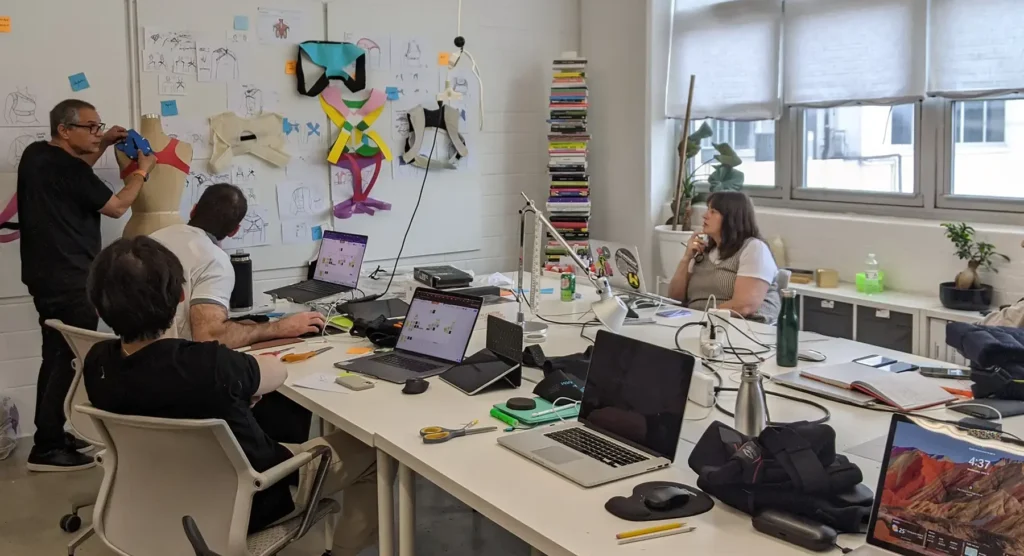
Empathetic Engineering: Designing for Real People

Empathetic Engineering: Designing for Real People

As designers, we regularly design for people whose experiences may be very different from our own. We design for bodies with different proportions, abilities, sensitivities, and needs, and for people who may use a product in environments we have never experienced ourselves. Understanding those differences, and translating them into better design decisions, is where empathy becomes an essential part of design.

Empathy is more than imagining ourselves in someone else’s shoes. It is an active process of questioning our assumptions, observing how people actually behave, and using research, prototyping, and testing to understand experiences beyond our own. It can shape everything from the pressure of a strap or placement of a seam to the force required to operate a mechanism. Understanding someone’s experience is only the beginning. The real value of empathy comes from what designers do with that understanding. Ideally, these empathetic observations result in smart structural decisions; mechanical function and human interaction work in harmony to create a good user experience.  

As AI becomes increasingly integrated into that process, the question of empathy becomes even more relevant. AI can help us generate ideas, synthesize information, and explore possibilities faster, but it cannot replace the human experience at the center of the design problem.

At Interwoven Design, designing around real human needs is fundamental to our work in wearable technology, soft goods, and products that interact directly with the body. In this Insight article, we explore what empathetic engineering really means, how it manifests in the smallest design decisions, and why understanding people remains one of the most important aspects of creating products that work in the real world.

From Empathy to Engineering

Empathy becomes meaningful when it impacts the design outcome. Consider a seemingly simple piece of user feedback: “This gets uncomfortable after an hour.” On its own, the statement describes an experience, not a design problem. The designer’s job is to investigate what is happening beneath it. Where does the discomfort occur? Is it caused by pressure, friction, heat, weight, or restricted movement? Does it happen only during certain activities? Does the product shift as the body moves? Is the problem caused by the material itself, or by the way that material is constructed? Each question moves the observation closer to an actionable specification. A pressure point might lead to a change in geometry or load distribution. Heat might suggest a more breathable material or a different ventilation strategy. Restricted movement could require rethinking the construction or introducing flexibility at a key joint. A few millimeters of additional clearance, a different seam placement, a softer edge, or a change in how components connect can fundamentally alter the experience of wearing or using a product.
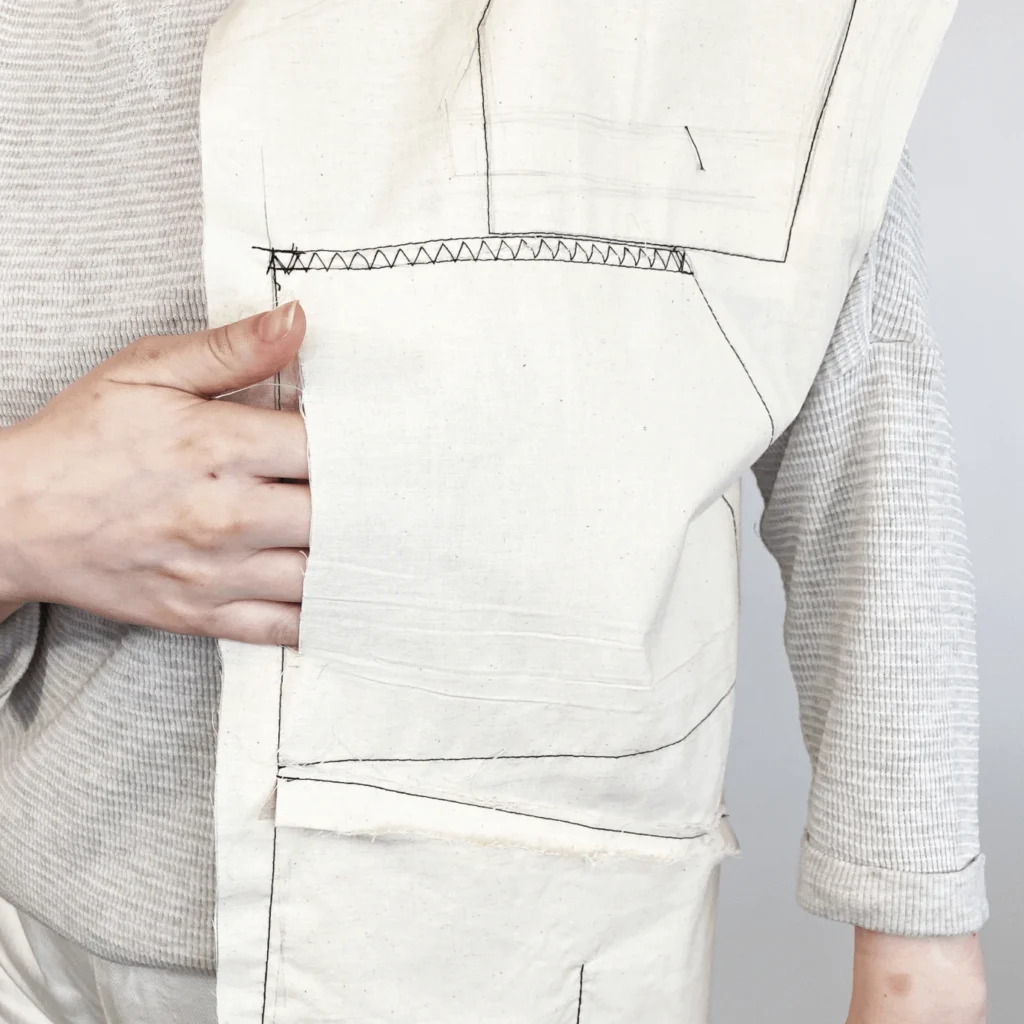
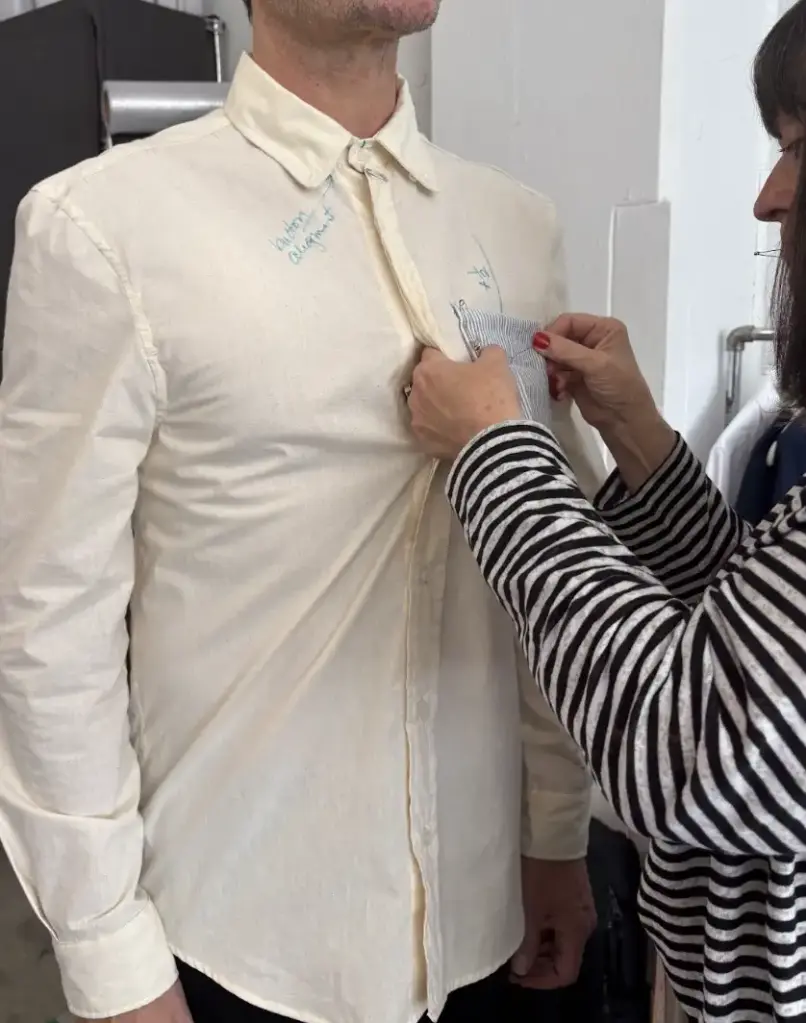
Muslin mockup of the Perci Emergency Preparedness Vest used to test pocket placement and accessibility
An early muslin mockup of the Perci Emergency Preparedness Vest used to explore pocket placement, accessibility, and fit on the body.

This is where empathy intersects with engineering. Ergonomics and human factors help us understand how a product interacts with the body and how people perceive and operate it. Materials determine not only durability and performance, but also how something feels against the skin, flexes with movement, or responds over time. Mechanisms dictate the force required to operate a product; manufacturing processes determine which solutions are possible at scale; and UX considers how all of these physical decisions come together in the user’s interaction with the product.

Empathy is not a separate step that happens before the “real” design work begins. It is an ongoing mindset that informs the specifications, constraints, materials, mechanisms, and decisions that make up that work. The designer listens to an experience, investigates the underlying need, and translates it into something that can be designed, prototyped, tested, and refined.

Designing Through Observation and Iteration

Understanding people requires more than asking what they want. People are often very good at describing an experience—“this feels awkward,” “I don’t know how to use this,” “I wish this were easier”—but they may not know exactly why something isn’t working. They may also adapt to a product’s shortcomings so completely that the behavior no longer feels worth mentioning, or know a topic so deeply that they wouldn’t think to mention details that seem foundational and obvious to them.

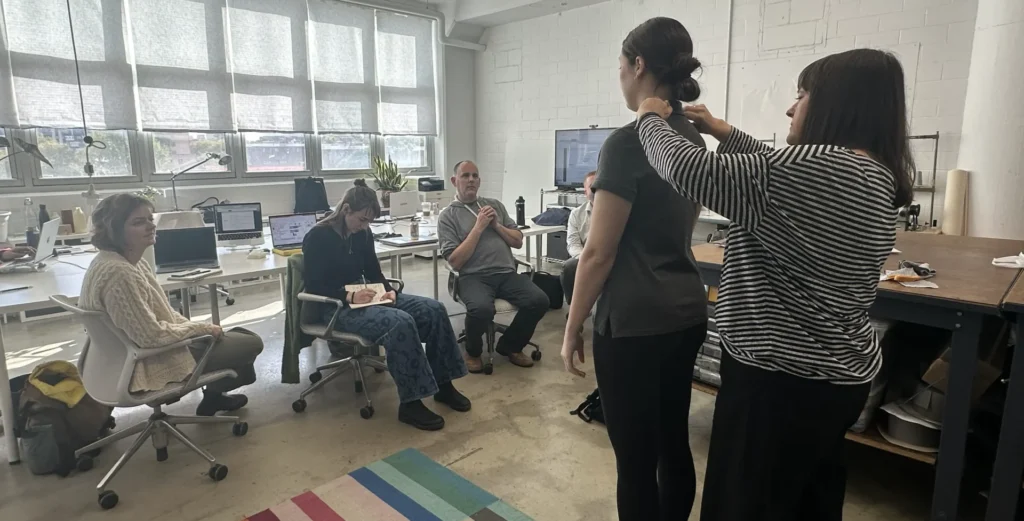
Observation can reveal what conversation misses. A user may repeatedly adjust a strap without realizing it, develop a workaround for a difficult closure, hesitate before performing an unfamiliar action, or move their body in an unexpected way to accommodate a product. These small behaviors can be more revealing than a direct answer because they show what people actually do rather than what they remember doing or believe they do.

For designers, this means paying attention to behavior as much as opinion. Contextual research, interviews, hands-on testing, and observation can help uncover the conditions surrounding an interaction: where a product is being used, what the person is doing at the same time, what they instinctively reach for, and where they encounter friction. We don’t assume that users can articulate the solution, but try to create a holistic picture of their experience so we can design for it.

Worker wearing a high-visibility Project Firefly workwear garment with reflective material across the back and sleeves
Project Firefly explored reflective workwear designed around worker movement, visibility, comfort, and durability.

Physical interaction becomes particularly valuable when a product has to work with the body. A rendering can communicate form, but it cannot fully communicate pressure, weight, reach, grip, movement, or the way a material responds as someone wears it. A prototype can. Once someone physically interacts with a product, assumptions that seemed reasonable on screen can quickly become visible—and sometimes the design needs to change substantially as a result. Project Firefly, developed with Red Kap, offers a clear example of how observation can reshape a design problem. Rather than looking only at the garment itself, the Interwoven team studied how workers moved in the environments where Type O workwear is used, observing common movements, abrasion, soiling, comfort, and mobility. The team also visited industrial laundry facilities to understand how garments were actually cared for and maintained. These observations, combined with research into reflective materials and their performance, informed the development and testing of new garment concepts designed to improve mobility and comfort while increasing durability and extending the garment’s lifespan.

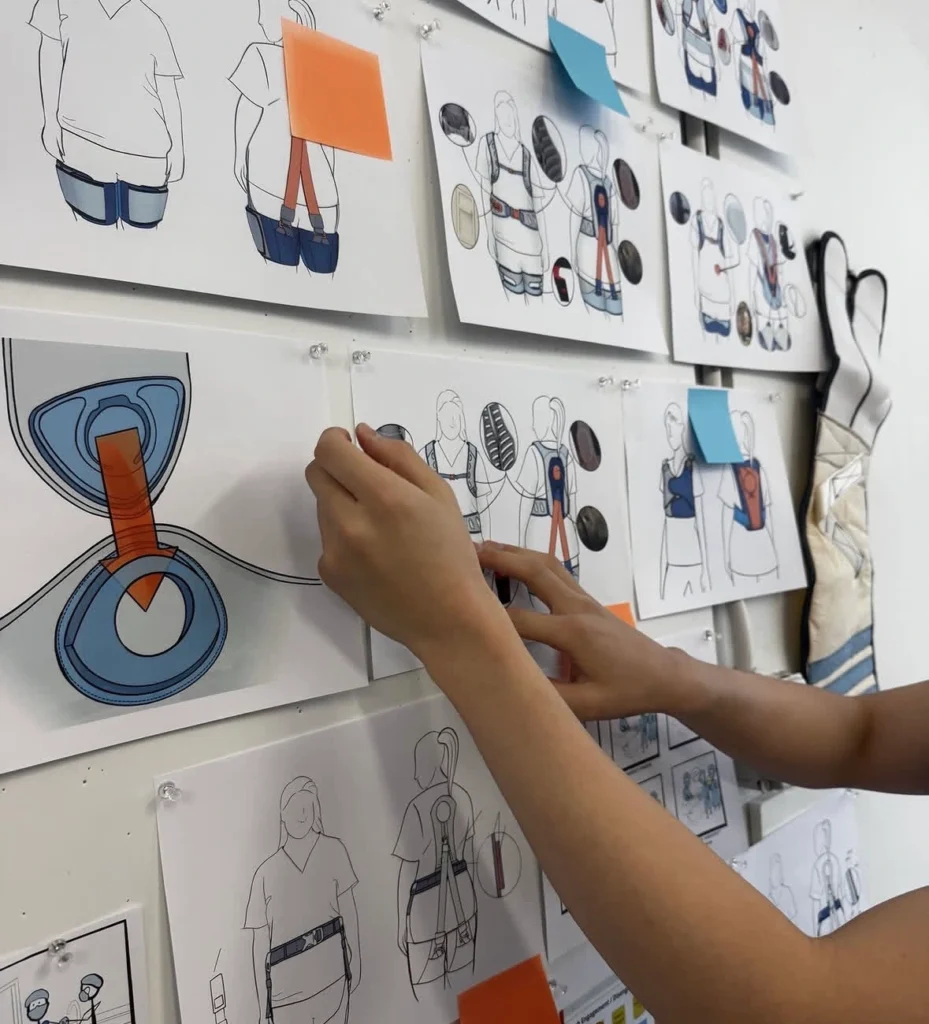
A designer’s first interpretation of a user’s needs will rarely be perfect. Instead of treating the first concept as an answer, prototyping creates a continuous loop: design, experience, observe, learn, refine. Each iteration provides another opportunity to compare what we expected to happen with what actually happened. We aren’t just asking, Did we get it right? We’re asking, What did we misunderstand? What surprised us? Where did the user’s behavior differ from our expectations? The body often tells us something the user can’t articulate.

Designing for Bodies That Aren’t Our Own

Designers inevitably bring their own bodies into the design process. We reach for a product, put it on, operate it, and make judgments based on what we see and feel. Our own experiences provide a useful starting point, but they can also become an invisible reference point for what we consider comfortable, intuitive, or easy to use. The people we design for rarely share exactly the same set of physical characteristics or abilities. Products may need to accommodate differences in size and proportion, age, mobility, strength, dexterity, and sensory ability. They may also need to account for pain, injury, or physical limitations that are not immediately visible.

This is particularly important when a product interacts directly with the body. A medical brace, adaptive garment, wearable device, or performance product cannot simply be designed around a static model of the human form. Bodies move. Dimensions change with posture and activity. Pressure that feels negligible while standing may become uncomfortable when sitting. A closure that seems effortless to one user may require significant strength or dexterity from someone else.

Soft goods make these challenges especially apparent. Unlike a rigid product, a garment or wearable system has to negotiate a constantly changing surface. Its success depends not only on its individual components, but on how those components behave together as the body moves through space. Ergonomic research, observation, physical testing, and working directly with users are strategies designers use to expose assumptions that are difficult to identify from a desk or CAD screen. A designer might assume a particular adjustment is intuitive until someone struggles to reach it, or believe a product feels secure until testing reveals that it shifts during a specific movement. The goal is not simply to collect feedback, but to uncover the physical realities that should shape the design itself.
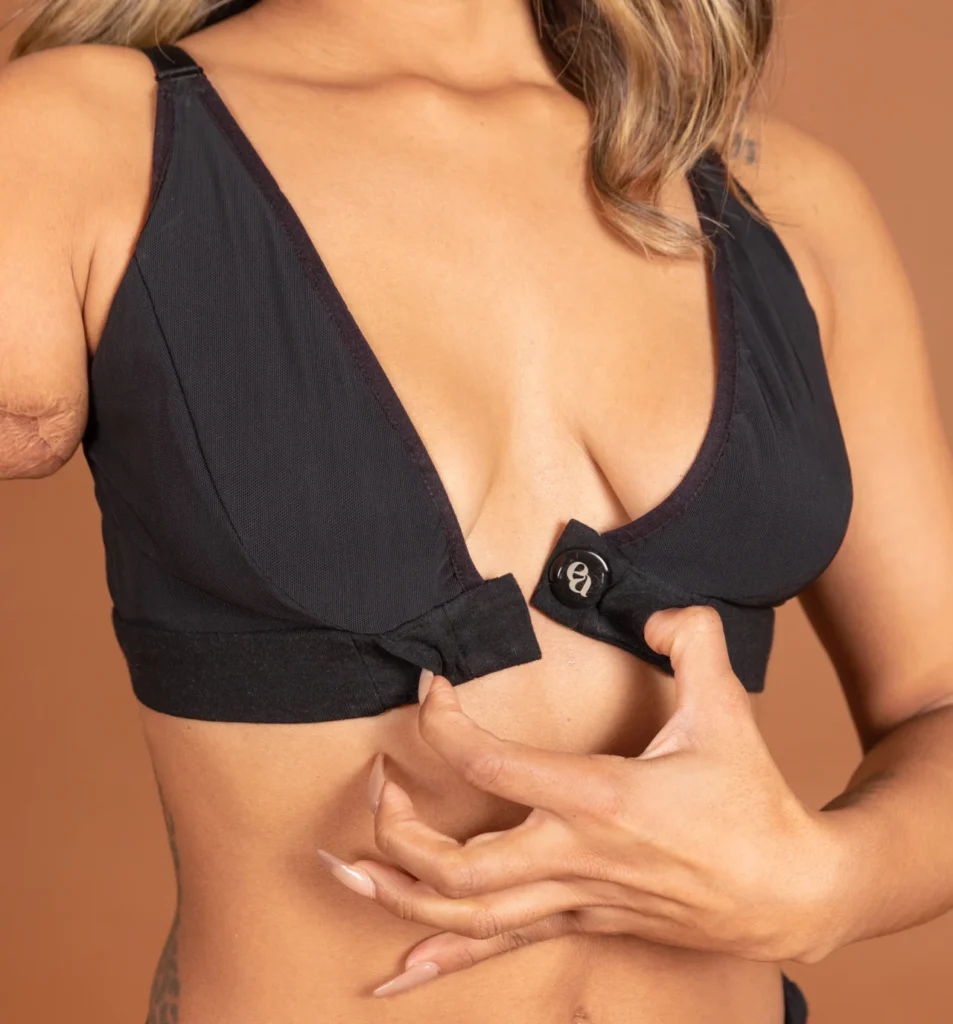
Woman using one hand to fasten the magnetic front clasp of an Even Adaptive bra
Even Adaptive lingerie uses an accessible magnetic front clasp designed for easier one-handed dressing.

For us at Interwoven Design, this perspective is relevant across medical devices, adaptive apparel, wearable technology, and performance garments. These products have to perform within the complexity of real human bodies, accommodating movement, varying physical needs, and prolonged interaction rather than a single moment of use. Our lingerie design for Even Adaptive illustrates how designing for a specific physical need can lead to a more thoughtful product overall. Interwoven developed the lingerie around the needs of women who may need to dress using one hand, rethinking both the garment and its closure system rather than simply adapting an existing bra. Prototypes of different magnetic clasps were tested for engagement force, durability, comfort, and ease of single-hand operation, ultimately leading to the development of finger loops that make the fastening easier to manipulate. The garment itself was also redesigned around accessibility, with front-adjustable straps and construction that supports easier reach and use. The result was a product designed around a wider range of bodies and abilities without sacrificing comfort, aesthetics, or the experience of wearing beautiful lingerie.

Designing for difference does not mean creating a separate solution for every possible user. It means questioning the assumptions built into the original solution and designing enough flexibility, adjustability, and consideration into the product to serve a target range of people. Often, the result is simply a better product. Features developed to help someone with limited dexterity can make a product easier for anyone to operate. Greater adjustability can improve fit across a wider range of bodies. Reduced pressure or weight can make a wearable more comfortable for everyone over a longer period of time. Designing for difference often produces better products for everyone.

When Empathy Meets AI

As AI becomes more integrated into the design process, it offers new ways to work with information. Designers can use it to generate concepts, synthesize research, explore variations, create visualizations, and identify patterns across large datasets. Used well, these tools can help designers process more information and explore more possibilities in less time. That said, there is an important distinction between having more information about people and understanding people. AI can summarize what users have said about a product, but it cannot experience the frustration of struggling with a clasp, and it can’t observe the physical awkwardness of moving in a garment that does not fit as intended. Those experiences still have to come from people.

It’s also a double edged sword. The same technology that makes research more efficient could also make it easier to simulate those interactions instead: generating personas, synthetic user quotes, or generalized assumptions about what a particular demographic wants. The result can look like empathy without being grounded in anyone’s actual experience. The distinction matters because empathy is not simply the ability to produce a convincing description of another person’s perspective. It requires designers to remain curious about what they might be missing. AI can help surface patterns, identify gaps in research, suggest questions, and accelerate the exploration of solutions, but designers still have to decide which questions matter, whose voices are missing, and whether a proposed solution actually works for the person who will use it. It cannot replace the human experience that empathy depends upon.

Empathy as Design Practice

Design is an act of translation: taking human needs, behaviors, limitations, and aspirations and turning them into physical and experiential realities. Empathy helps us make that translation accurately. It does not sit apart from engineering, ergonomics, aesthetics, or manufacturing, but is embedded in the decisions that connect them; the form of a product, the material against the skin, the fit across different bodies, the force required to operate a mechanism, the accessibility of an interaction, or the way something can be manufactured and used over time.

AI will undoubtedly change how designers make those decisions. As our tools become increasingly capable of generating concepts, processing information, and exploring solutions, however, understanding who we are designing for becomes even more important. When the number of possible solutions expands, the ability to identify the right problem—and understand the human experience behind it—becomes a critical part of design judgment.

This is why human-centered research, engineering, soft goods expertise, prototyping, and iterative testing are deeply interconnected here at Interwoven Design. The goal is not simply to create products that function, but products that function for real people, in real contexts, over time. We embed empathy into everything we make, resulting in a product that fits better, moves more naturally, requires less effort, or simply makes someone’s day a little easier.
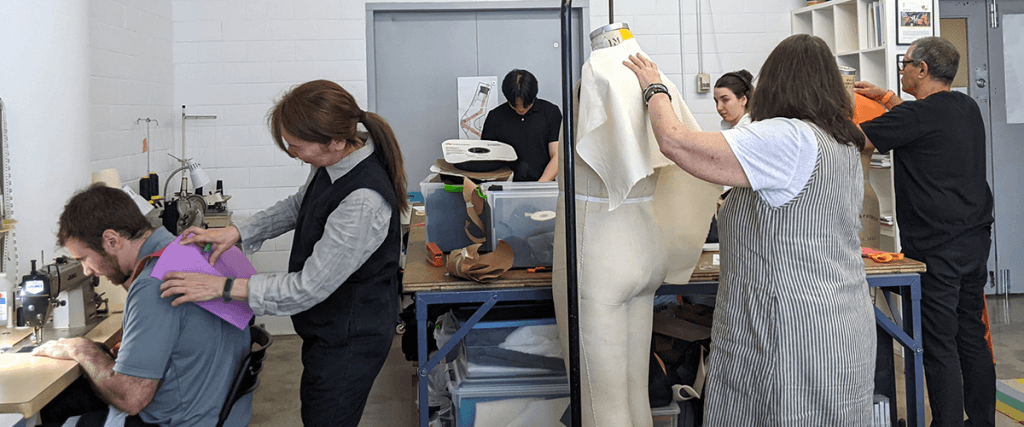
Interwoven Design is a design consultancy that is positioned at the intersection of soft goods and wearable technology, creating products that function with the body and offer comfort as well as the superb performance that arises through the innovative incorporation of rigid, often electronic and responsive elements. Sign up for our newsletter and follow us on Instagram and LinkedIn for design news, multi-media recommendations, and to learn more about product design and development! 


A Reflection on Design Internships

A Reflection on Design Internships

An internship is an important rite of passage for any aspiring industrial designer. For students and new graduates, it’s an essential step to get your foot in the door of the industry and break out of the conceptual bubble that is design school.

Internships provide an opportunity to do real design work for a real design company on a temporary basis, essentially a trial run of what the rest of your career might look like. While many students view internships simply as a prerequisite to receiving a full-time job offer, the real value of an internship is learning about yourself through your experience of working for someone else. Through experiential learning, internships help you figure out what you want your future career to look like and how you can make it happen.

Whether you want to work in a specific discipline like soft goods, open up your own studio, or simply figure out a direction for your design career, seeking out targeted internship opportunities and work experience is the best way for young designers to carve out their path in the industrial design field.

How We Got Our Internships at Interwoven Design

Adam Gottesdiener (RISD, Class of ’26)

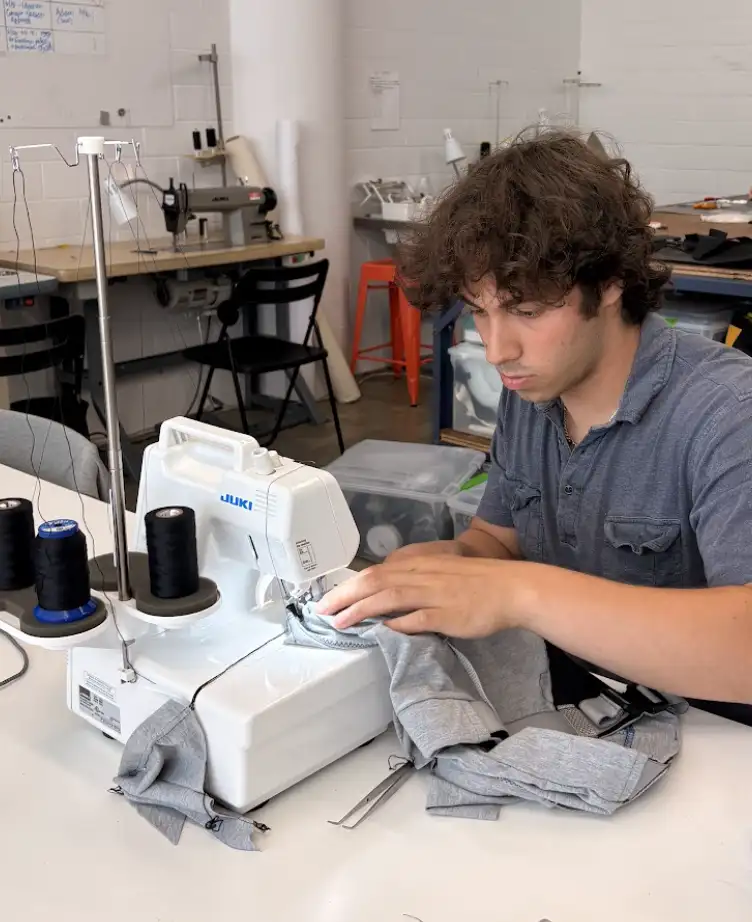
RISD industrial design intern Adam Gottesdiener uses a serger sewing machine in the Interwoven studio to construct a grey fabric soft goods prototype.
Adam applying his sewing and textile skills at the serger machine to construct soft goods prototypes at Interwoven Design.

My internship search started with a very specific objective: find a place to work that specializes in soft goods and wearables. As a junior at RISD studying Industrial Design, I enjoyed the traditional coursework focused on shop techniques, CAD, and hard goods, but my true passion was sewing and soft goods development. I decided to seek out design firms that specialized in this area so I would be a uniquely qualified candidate for an internship position.

Today’s job market for students and recent graduates is saturated at an unprecedented level. Applying for 50 or more generic jobs a day among my peers is no longer considered an exceptional amount of effort, but rather the norm. While I understand the urge for young designers to mass-apply to every opening they see, I believe there is far more value and potential in seeking out a select few places that uniquely align with who you are and what you do as a designer, making a more concerted effort to be noticed there.

I found out about Interwoven Design on LinkedIn and instantly knew I’d be a great fit, their studio was full of sewing machines, materials, and soft goods development setups, all of which aligned with my background. At the time, they didn’t have an internship posting listed on their page, but I took the time to send them an email anyway with a curated portfolio highlighting my apparel and textile work.

When a fresh internship posting eventually appeared weeks later, I decided to take a unconventional approach: I printed out my application materials, put on a collared shirt, and took a trip to 630 Flushing in Brooklyn to visit the office unannounced. I knocked on the door, introduced myself to a slightly confused employee, and explained that I had already applied online but wanted to drop off my physical portfolio in person.

Initially, after a few rounds of interviews, I received an email informing me that I hadn’t been selected for the role. While I was dismayed, I didn’t give up. It took over a year of staying in touch—sharing updates on my senior thesis and showing growth as a candidate—before Rebeccah reached out right before graduation to offer me a spot. From this process, I learned not to get discouraged at an initial rejection: if you truly feel like a studio is right for you, persistence and targeted effort will pay off.

Chloe Bonnet (Pratt Institute, Class of ’27)

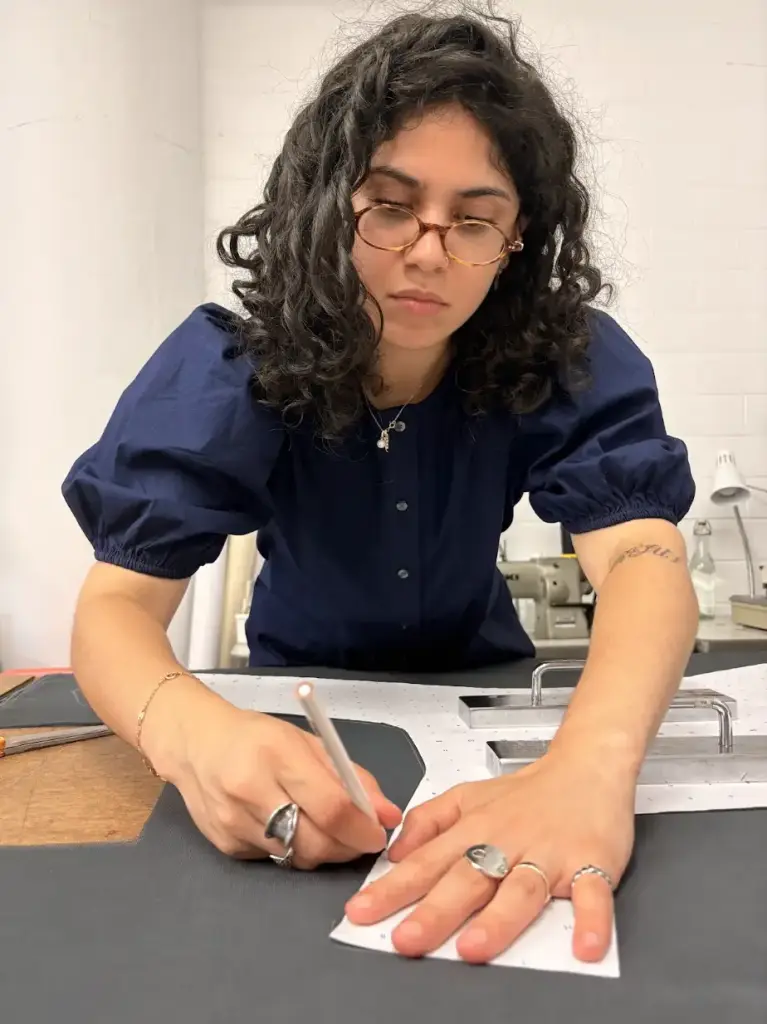
Pratt industrial design intern Chloe Bonnet carefully traces pattern pieces onto technical fabric at a cutting table in the Interwoven studio.
Chloe bringing precision and academic discipline to pattern drafting and soft goods development.

Since starting my education at Pratt Institute, I’ve developed a deep interest in soft goods and wearable design, which sits right at the intersection of Industrial Design and Fashion Design. How I landed my internship at Interwoven Design was closely related to my general outlook on my education and how I approach my coursework at Pratt.

As Industrial Design students, we are surrounded by professors who have established careers in the field and deep industry networks. Having the opportunity to gain insight into the kind of work different professors and studios do is priceless. Throughout my years at Pratt, I’ve made a point to expand my learning by taking classes with many different professors and actively seeking out their perspectives.

While in school, it’s important to understand that how you show up matters. Developing a high standard for your work and your professional habits prepares you directly for an internship by establishing responsibility, punctuality, and organization. An internship is the direct next step from university learning. Small habits—like taking thorough notes, remembering key technical details, and managing your time across multiple deadlines—allow you to balance your priorities smoothly.

Rather than expecting to enter an internship as a master designer with a definitive perspective, understand that interning is about exploration, active listening, and adaptability. Bringing a high-value approach to your daily learning in school builds the exact discipline you need to excel when stepping into a professional team environment.

What We Learned at Our Internship

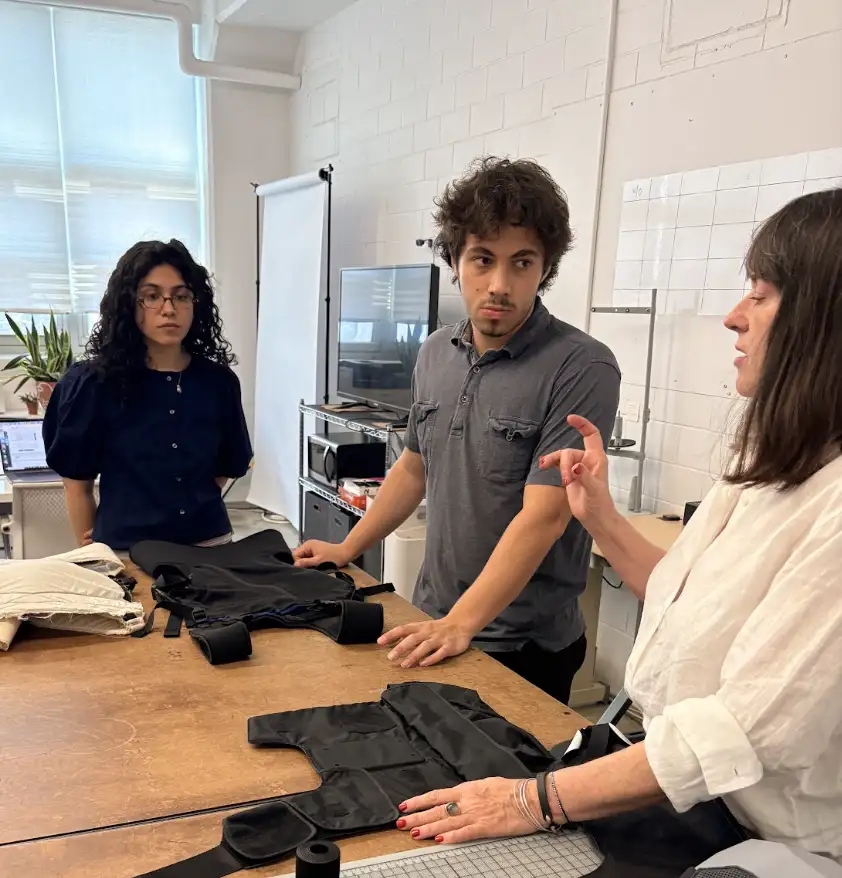
Interwoven Design leadership and interns Adam Gottesdiener and Chloe Bonnet gather around a worktable reviewing black technical soft goods prototypes.
Active review sessions allow interns to observe real-world design decisions and technical feedback on soft goods prototypes.

1. Executing for Someone Else

In design school, projects are largely self-directed and driven by your personal aesthetic. An internship takes you out of the driver’s seat. Your main job is to translate leadership’s direction into real output, adapt to the studio’s workflow, and absorb their conventions. Over time, you develop a shorthand with your team, learning not just what needs to be done, but why it needs to be executed in that specific way.

2. Treating Every Task as Essential

As an intern, you will handle a wide variety of responsibilities, many of which are not strictly design-related. Handling administrative tasks, shipping packages, prepping materials, or organizing the studio may not feel like glamorous design work, but treating every responsibility with high attention to detail proves you are a reliable, trustworthy team player.

3. Learning by Observation

Your primary role as an intern isn’t to push your own design opinions, but to observe how experienced designers make decisions under real constraints. Sitting in on team meetings, listening to designers debate details, and watching how client feedback shapes a project provides insights no classroom can replicate.

4. The Power of Communication

At Interwoven Design, we saw firsthand how projects progress from early client brief alignment all the way to final tech packs and functional prototypes. Learning how to communicate your ideas clearly—both internally with fellow designers and externally with clients—is what ultimately turns concepts into successful physical products.

Insights from Our Peers: Studio vs. Corporate

An industrial design internship can look drastically different depending on where you work:

  • Independent Studios: Smaller studios offer broader exposure to the full project lifecycle. With smaller, agile teams, interns get hands-on experience across prototyping, client presentation prep, and day-to-day studio operations.
  • Large Corporations: Often have dedicated resources for talent recruitment and structured intern programs. However, because projects involve multiple departments (legal, marketing, PR, engineering), decisions take longer, and interns often work on very specialized, narrow slices of a project.

Experiencing different studio environments during your student years is the best way to understand what type of work culture, team size, and design process aligns with your long-term career goals.

Key Takeaways for Future Interns

  • Focus on Quality Over Quantity: Target a select few studios that genuinely match your skill set rather than mass-applying to dozens of generic job postings.

  • Tailor Your Materials: Customize your portfolio, cover letter, and resume to highlight the exact skills (e.g., soft goods, pattern-making, CAD) the studio relies on.

  • Rejection Is Could be Just Timing: View a “no” as an invitation to stay in touch, keep improving your portfolio, and share periodic updates on your work.

  • Bring Value Through Effort: Be proactive, organized, and enthusiastic about every task, big or small.

A career path in design is rarely outlined from the very start. It takes being proactive, creating your own opportunities, and staying resilient when things don’t go according to plan. Looking back down the line, you’ll realize that every challenge, quiet season, and small success along the way was equally important in getting you to where you wanted to be.

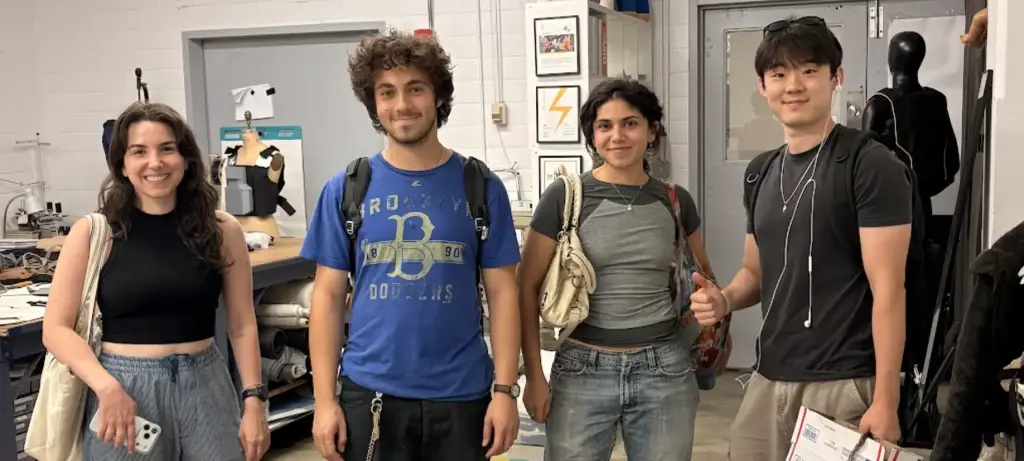
Interwoven designers and industrial design interns Adam Gottesdiener and Chloe Bonnet posing together in the Brooklyn studio.
Wrapping up the day together in the Brooklyn studio after pushing through a major project deadline.

Interwoven Design is a design consultancy that is positioned at the intersection of soft goods and wearable technology, creating products that function with the body and offer comfort as well as the superb performance that arises through the innovative incorporation of rigid, often electronic and responsive elements. Sign up for our newsletter and follow us on Instagram and LinkedIn for design news, multi-media recommendations, and to learn more about product design and development!
Rethinking the Uni-form: Designing for Every Body

Rethinking the Uni-form: Designing for Every Body

A uniform is designed to create unity. By definition, it means remaining the same in all cases and at all times. In sports, it symbolizes equity, shared identity, and belonging. But human bodies are anything but uniform. For decades, uniform design has mastered the art of creating visual unity. As our understanding of human anatomy, movement, and performance materials continues to evolve, it’s worth asking: What’s next for the uniform?

There is an inherent tension between a standardized product and the fluid, unpredictable reality of human anatomy. Rather than seeing today’s athletic apparel as a limitation, I see it as a foundation—one that invites us to rethink how performance products can evolve. The future isn’t about replacing the traditional playbook; it’s about expanding it to embrace human variability as a design opportunity.

The Clues in the Micro-Adjustments

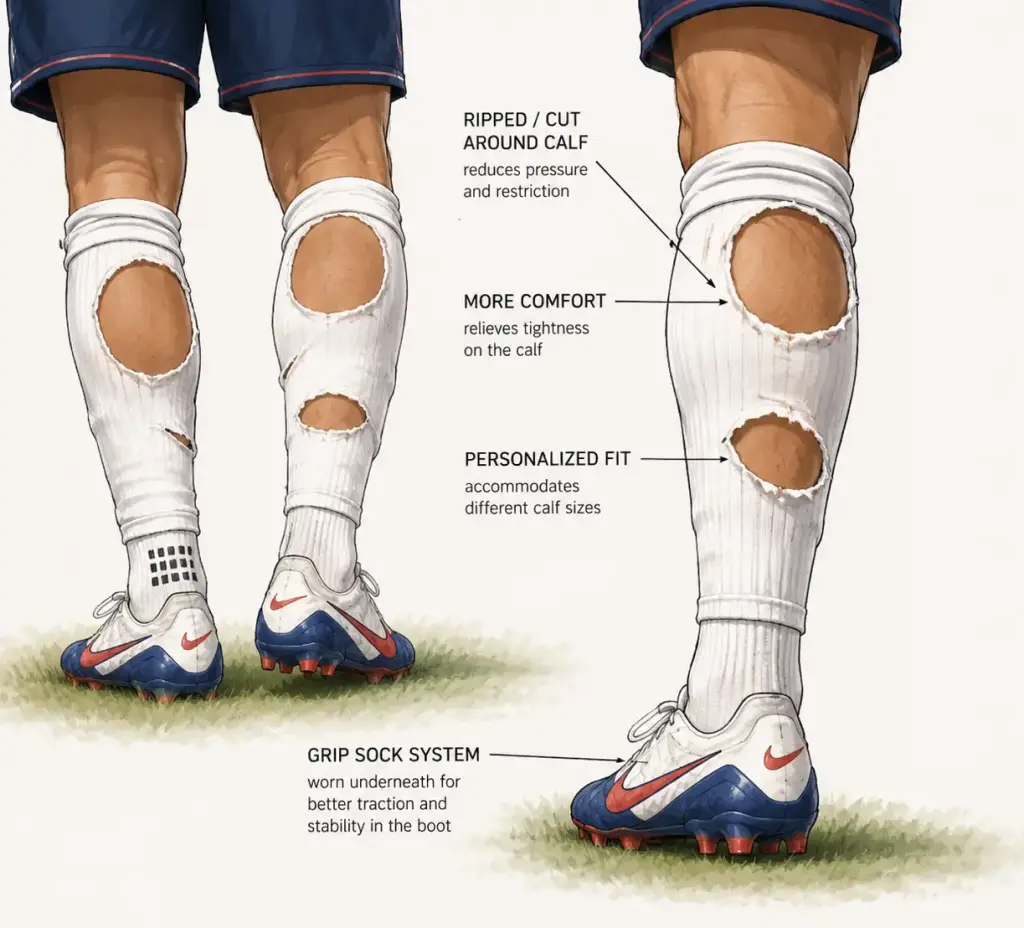
Watching professional sports closely reveals a fascinating trend: elite athletes making subtle, intuitive making subtle, intuitive adjustments to their gear.

Close-up of a soccer player's lower legs showing team-issued socks with holes cut around the calves, revealing the compression layer underneath.
Professional athletes often make small modifications to their uniforms to improve comfort and performance. These adjustments can offer valuable insights for future sportswear design.

Soccer players routinely modify their team-issued socks to improve comfort and reduce pressure. Basketball players roll waistbands or adjust their collars during play. These aren’t acts of self-expression. They’re performance-driven adjustments that help athletes optimize fit, comfort, and movement while remaining visually united as a team.

Designing a uniform means balancing many priorities: performance, durability, manufacturability, and a shared visual identity. Yet no two bodies move exactly alike. As athletes sprint, twist, jump, and stretch, subtle differences in anatomy and movement naturally emerge.

Rather than seeing these adaptations as exceptions, we can view them as valuable design feedback. They reveal opportunities for apparel to better support the individual while preserving the collective identity that uniforms are meant to represent.

Designing from the Body Outward

An inspiring example of this mindset shift can be found in highly specialized performance gear—such as custom racing wheelchairs engineered for Special Olympics athletes.

Custom racing wheelchair designed for a Special Olympics athlete, highlighting individualized seating, support, and frame geometry.
High-performance adaptive equipment begins with the athlete’s body. Every component is engineered to support individual movement, comfort, and performance.

Here, the equipment adapts to the athlete—not the other way around. Because a project cannot start with a generic template, the engineering must begin entirely with the athlete’s unique body, posture, and movement patterns. Every decision—from the frame geometry to the seating angle—is tailored to an individual’s specific capability.

What makes these projects so compelling is how seamlessly hard and soft systems work together. While the rigid frame delivers mechanical speed, the athlete’s safety and endurance depend entirely on the softer touchpoints: pressure-mapped cushions, custom-contoured supports, and anatomical strapping. It proves that when design starts from the body and builds outward, it unlocks a completely different level of synergy between the user and the product.

An Unexplored Space for Future Possibilities

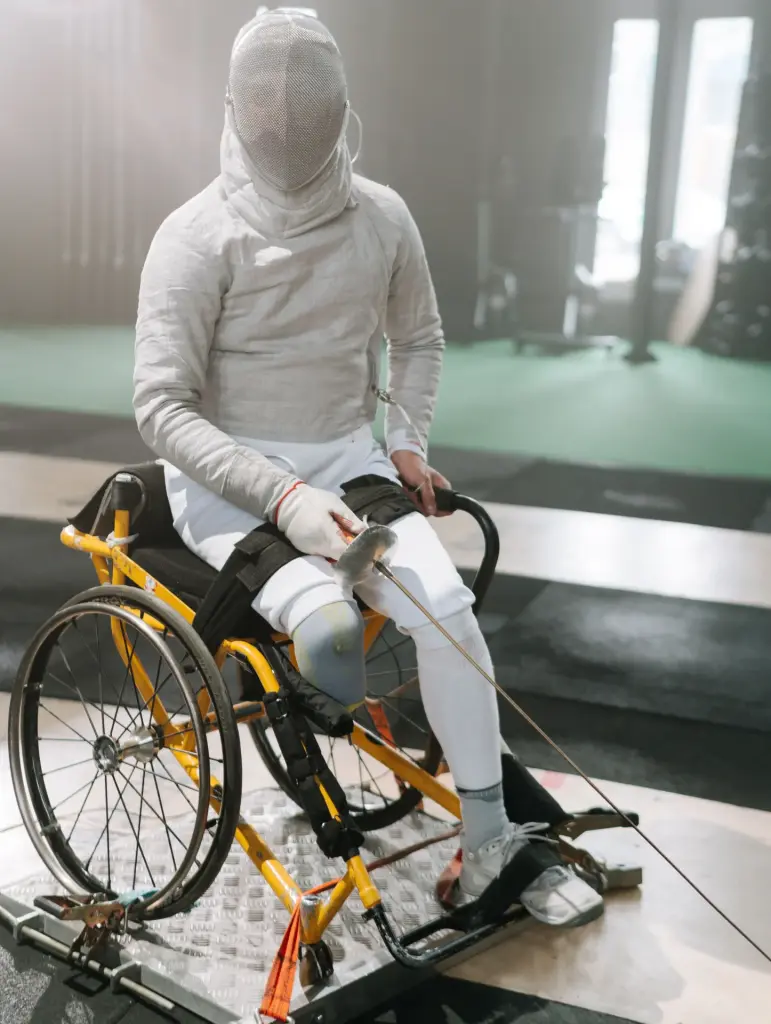
Wheelchair fencer in full protective uniform seated in a specialized sports wheelchair during training.

If complex performance equipment can be engineered to adapt so precisely, it opens up a largely unexplored opportunity for the future of team apparel.

The future of sportswear doesn’t have to mean a uniform that simply scales rigidly from XS to XXL. Instead, the “uni-form” can be imagined as an adaptable, modular system—one that maintains a shared team identity on the outside, while flexing to accommodate different body geometries and abilities on the inside.

That shift could lead to uniforms with modular paneling that accommodates different postures or prosthetics, adaptive seam placement that follows movement rather than symmetry, intuitive closures that support independent dressing, and material zones tuned for comfort, breathability, or sensory needs. The goal isn’t to change what a team looks like. It’s to expand how many athletes can perform at their best while sharing the same identity.

Belonging and Performing Together

Belonging to a team is an emotional experience, and the uniform is the visual anchor of that bond. True innovation in this space doesn’t mean sacrificing visual unity; it means evolving the underlying architecture so that the uniform supports every athlete’s peak expression.

Uniform design has always been about creating belonging.
The next chapter isn’t about changing that purpose. It’s about expanding who that belonging is designed for. Perhaps the future of the uni-form isn’t one form at all.

It’s designing for every body.

Diverse group of people representing individuality, body diversity, and personalized design possibilities for the future of apparel.
The human body is the starting point for thoughtful design. Understanding individual form, movement, and personal needs opens new possibilities for the future of adaptive apparel and performance products.

Interwoven Design is a design consultancy that is positioned at the intersection of soft goods and wearable technology, creating products that function with the body and offer comfort as well as the superb performance that arises through the innovative incorporation of rigid, often electronic and responsive elements. Sign up for our newsletter and follow us on Instagram and LinkedIn for design news, multi-media recommendations, and to learn more about product design and development!
Beyond Devices: The Future of Smart Textiles

Beyond Devices: The Future of Smart Textiles

For years, wearable technology has been defined by devices; watches, bands, clips, and sensors attached to the body. These products brought computing closer to us, but they remained distinct objects, layered onto daily life rather than fully integrated within it. Today, that boundary is beginning to dissolve. Advances in miniaturization, materials, and fabrication are enabling a new generation of wearable technology that is built directly into what we wear. Electronics are becoming so small, flexible, and adaptable that they can be embedded into fibers, yarns, and fabrics, transforming textiles into intelligent systems. In this emerging paradigm, clothing transforms from a passive to an active layer; capable of sensing, communicating, and supporting the body in real time.

At Interwoven Design, we operate at the intersection of soft goods, wearable technology, and human-centered design. Our team brings together expertise in textiles, engineering, and product development to translate complex technologies into wearable solutions that feel intuitive and natural. In this Insight article, we explore how smart textiles are redefining wearable technology, and the design challenges that come with embedding intelligence into fabric. We also examine IARPA’s SMART ePANTS program as a case study in how next-generation textile systems are being developed and what they signal for the future of wearable design across industries.

From Wearables to Woven Systems

Early wearable technologies succeeded by attaching intelligence to the body. Devices were clipped, strapped, or adhered, creating a clear distinction between the user and the technology. While effective, this approach introduced friction, both physical and cognitive. Devices had to be managed, charged, positioned, and maintained.

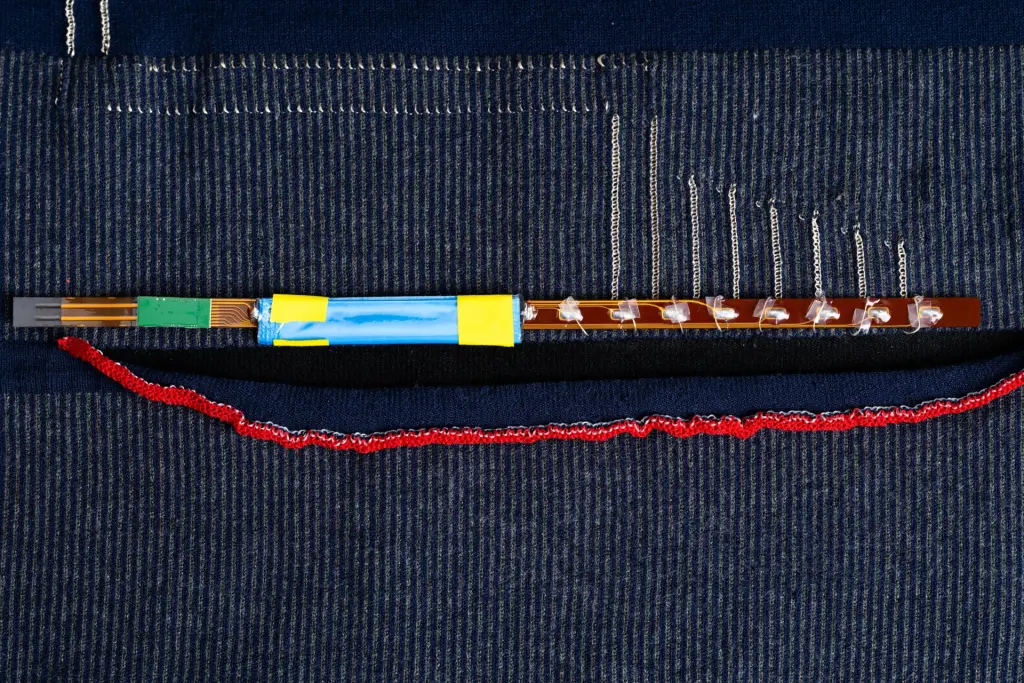
A flexible circuit with sensor pad, PCB, power module, and surface-mount components integrated into a knit textile alongside conductive threads and stitching, illustrating smart textile construction
Sensors, circuitry, and power integrated directly into the fabric. The electronics are not attached to the textile; they are part of it.

Smart textiles represent a fundamental shift away from this model. Instead of discrete objects, intelligence becomes distributed across the garment itself. Sensors, conductive pathways, and responsive elements are integrated into the fabric, allowing the entire system to function as a cohesive whole. The garment is no longer a carrier of technology; it is the technology.

This shift enables interaction that is continuous and embedded in daily life. Rather than engaging with a device, users inhabit a system. Clothing can sense movement, monitor physiological signals, respond to environmental changes, and communicate data without requiring direct input. At the core of this transformation is the rapid miniaturization of electronic components. Sensors, conductors, power sources, and processing units are shrinking to the point where they can be incorporated into fibers and yarns without compromising flexibility or comfort. Conductive threads can function as wiring, while micro-scale sensors can be embedded directly into the structure of a textile.

This evolution changes how designers think about materials. Electronics shift from separate components to be housed within a product to intrinsic properties of the material itself. A fabric can conduct, sense, heat, or transmit information, not because something has been added to it, but because it has been engineered to do so at a fundamental level. As a result, the role of design expands. Decisions about weave structure, fiber composition, and material layering become as critical as traditional considerations like form and enclosure. Designing a smart textile is not just about integrating technology, it is about orchestrating performance at the level of the material system.

The Challenges of Translation

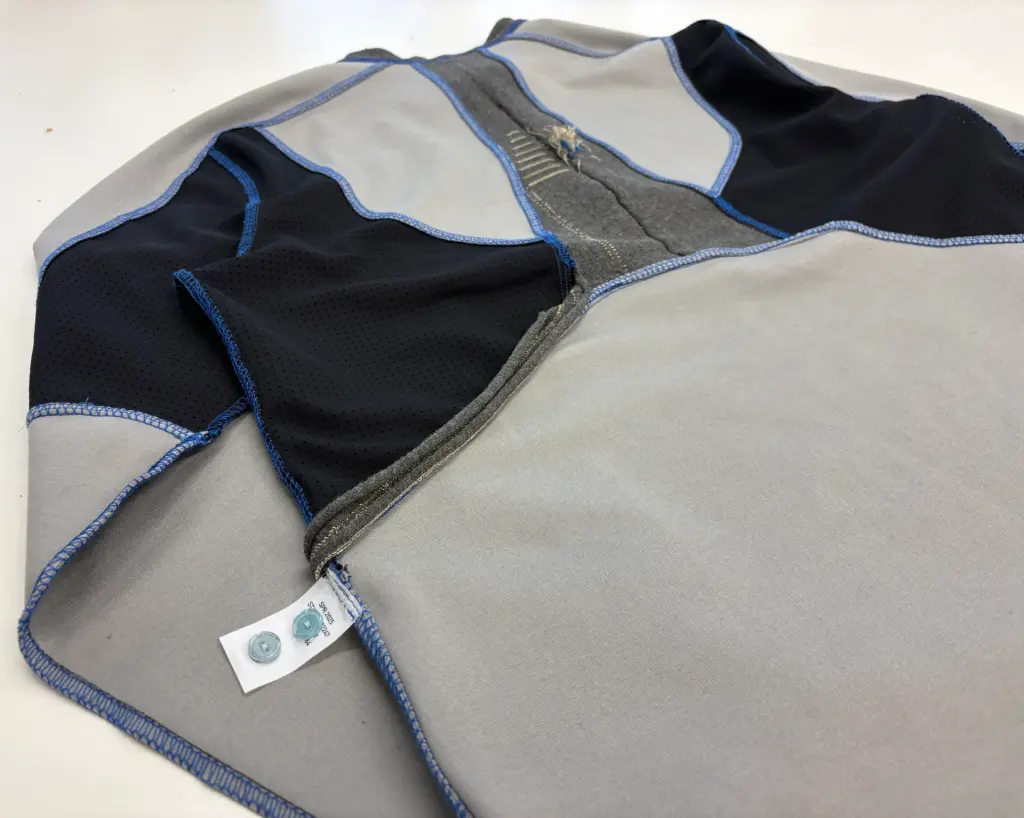
For designers, the central challenge of smart textiles is not simply technical integration, it is experiential translation. Electronics and textiles are fundamentally different systems, governed by opposing constraints. One is rigid, precise, and sensitive; the other is soft, adaptive, and expected to endure constant movement, friction, and environmental exposure. Bridging these worlds requires more than embedding components into fabric; it demands rethinking how products are conceived from the ground up. Traditional product design often treats materials as a means of housing or protecting internal components. In smart textiles, the material is the system. Decisions about fiber composition, knit structure, layering, and seam construction directly impact not only comfort and durability, but also electrical performance. Stretch, for example, is no longer just a fit consideration, it affects conductivity, signal stability, and sensor accuracy. Similarly, the placement of seams or zones of tension can influence how reliably a system performs over time.

Inside view of an Interwoven concept garment for SMART ePANTS. Conductive channels follow the seams, making construction decisions inseparable from electrical performance.

Designing at this level introduces a new set of constraints that must be balanced simultaneously. A garment must stretch, but not in ways that compromise embedded circuits. It must be breathable, while still protecting sensitive elements from moisture. It must withstand washing, abrasion, and repeated wear cycles without degrading performance. Each of these requirements influences the others, creating a tightly interdependent system where small decisions can have cascading effects.

Durability and lifecycle are also notable challenges. Unlike traditional electronics, which are often treated as discrete, replaceable objects, smart textiles are expected to behave like clothing: washed frequently, worn in varied conditions, and maintained over time. Designers must consider how these products age, how components are protected or exposed, and what failure looks like. Does the garment continue to function if one element degrades? Can it be repaired, or is it disposable? These questions push design beyond form and function into systems thinking.

Equally important is the user experience. Smart textiles must feel indistinguishable from traditional garments, even as they perform complex functions. This requires careful attention to weight, drape, texture, and fit. Hard points, bulk, or inconsistencies in material can quickly break the illusion, reminding the user that they are wearing a device rather than clothing. The goal is to achieve a level of integration where the technology disappears; where the garment behaves exactly as expected while quietly delivering enhanced capability. Designers must also consider how to communicate functionality through material, form, and experience. Feedback may come through changes in temperature, pressure, or texture rather than visual interfaces. The product must feel reliable and intuitive, even when its most advanced features are hidden from view.

Designing smart textiles is an exercise in reconciliation. It requires aligning the precision of electronics with the fluidity of textiles, the demands of performance with the expectations of comfort, and the complexity of systems with the simplicity of everyday use. 

Case Study: SMART ePANTS

An Interwoven designer adjusting the fit of a cream-colored shirt on a fit model during a SMART ePANTS garment development session
A fit model session for an Interwoven garment developed for the SMART ePANTS program, where pattern and fit are refined to keep embedded technology comfortable and unobtrusive in wear.

One of the most ambitious explorations of this concept is the SMART ePANTS program, developed by the Intelligence Advanced Research Projects Activity (IARPA). The initiative focuses on creating fully integrated textile systems: garments that incorporate sensing, power, computation, and communication directly into the fabric.

The goal of SMART ePANTS is to develop clothing that can capture and process information about the wearer and their environment without relying on external devices. Sensors capable of detecting audio, movement, and location are woven into the garment, while conductive fibers act as wiring to connect these systems. Power is supplied through flexible, deformable energy solutions, and data is processed using ultra-low-power electronics embedded within the textile structure.

What distinguishes this program is not any single technology, but the level of integration. Rather than assembling components into a wearable device, SMART ePANTS treats the garment itself as a platform where every element, from fiber to system architecture, contributes to overall performance. The result is a product that maintains the look and feel of everyday clothing while functioning as a sophisticated technological system. This approach has significant implications for design. By embedding intelligence directly into textiles, the need for bulky hardware is reduced, and the user experience becomes more seamless. The garment can be worn naturally, without requiring adjustment or awareness, allowing technology to operate in the background.

From Research to Real-World Applications

While programs like SMART ePANTS are rooted in advanced research, their implications extend far beyond specialized applications. As these technologies mature, they will begin to influence a wide range of industries, from healthcare and wellness to performance apparel and everyday clothing, translating into applications that prioritize comfort, wearability, and seamless integration into daily life. The trajectory is familiar: high-performance, research-driven innovation gradually becomes refined, simplified, and accessible to broader audiences.

In healthcare, this shift is particularly evident. Garments designed for continuous physiological monitoring are moving away from rigid patches and adhesive sensors toward soft, wearable formats that can be worn over extended periods. For example, products like the Hexoskin Smart Shirt integrate sensors directly into the fabric to monitor respiration, heart rate, and activity without requiring additional devices. Similarly, platforms such as the Sensoria Smart Socks embed pressure sensors into knit structures to analyze gait and movement, demonstrating how everyday apparel can double as a data collection system without sacrificing comfort.

Performance apparel is another area where smart textiles are gaining traction. Brands are exploring garments that actively support the body through embedded functionality rather than external hardware. The Ralph Lauren PoloTech Shirt tracks biometric data and streams it to your device, while recovery-focused compression garments incorporate engineered fabrics that enhance circulation and muscle support. 

In wellness and lifestyle applications, smart textiles are becoming increasingly discreet and intuitive. Sleep-focused products, posture-correcting garments, and stress-responsive wearables are leveraging soft, flexible materials to deliver benefits without introducing friction into daily routines. Early-stage innovations, such as textiles that can subtly adjust temperature in response to the body or fabrics that incorporate haptic feedback for relaxation, point toward a future where garments play an active role in regulating comfort and well-being.

In industrial and safety contexts, smart textiles are moving beyond rigid equipment toward more wearable solutions. High-visibility clothing with embedded sensors can monitor worker fatigue or environmental conditions, while military and first-responder gear is beginning to incorporate distributed sensing systems that enhance situational awareness without adding bulk. 

Across these categories, a consistent pattern emerges: the most successful products are those that translate complex technology into familiar, wearable formats. Rather than introducing entirely new behaviors, they enhance existing ones, turning shirts, socks, and outerwear into platforms for sensing, response, and support. As the underlying technologies continue to mature, the distinction between “technology” and “textile” will become increasingly blurred, paving the way for products that feel less like innovations and more like natural evolutions of what we already wear.

The Future: Textile as Interface, System, and Platform

The future of smart textiles is one where the textile itself becomes the interface, the system, and the platform. Clothing will no longer be a static layer, but an active participant in how we experience the world: sensing, responding, and adapting in real time. For designers, this represents a fundamental shift in how products are conceived and developed. It requires thinking beyond objects and toward systems, beyond components and toward materials, and beyond interaction and toward experience. The challenge is to harness the potential of embedded intelligence while maintaining the qualities that make textiles inherently wearable: softness, flexibility, and comfort. The most successful solutions will not be those that showcase technology, but those that integrate it so seamlessly that it becomes invisible, leaving behind only the experience of wearing something that works effortlessly with the body.

At Interwoven Design, we partner with clients to navigate this evolving landscape, translating emerging technologies into products that balance innovation with usability. By integrating expertise in soft goods, textiles, and wearable systems, we help bring the next generation of smart textiles from concept to reality. 

Interwoven Design is a design consultancy that is positioned at the intersection of soft goods and wearable technology, creating products that function with the body and offer comfort as well as the superb performance that arises through the innovative incorporation of rigid, often electronic and responsive elements. Sign up for our newsletter and follow us on Instagram and LinkedIn for design news, multi-media recommendations, and to learn more about product design and development!
Beyond the Portfolio: Starting a Career in Industrial Design

Beyond the Portfolio: Starting a Career in Industrial Design

Product design is evolving rapidly. Across industries, the boundaries between physical products, digital experiences, and wearable systems are becoming increasingly fluid, creating new opportunities for designers. Designers today are expected to think beyond form alone, considering how products function within broader systems of manufacturing, interaction, human behavior, and experience.

For new graduates entering the field, this moment is both exciting and challenging. The range of possible career paths has expanded dramatically, but so have expectations. Many emerging designers find themselves asking the same questions: How do I stand out in a competitive market? What kind of portfolio do design firms actually want to see? How do I gain experience when most opportunities seem to require it already? Navigating the transition from school to industry can feel uncertain, particularly as the profession itself continues to evolve.

At Interwoven Design, we seek new industrial design interns every year, giving us a firsthand perspective on what differentiates successful candidates in today’s hiring landscape. In this Insight article, we explore what studios are actually looking for in new graduates, and how emerging designers can position themselves more strategically as they search for internships and full-time roles. We also examine the power of a point of view, and how to develop meaningful industry connections.

Develop a Point of View

A quality that immediately distinguishes strong emerging designers is the presence of a clear point of view. In a highly competitive hiring landscape, portfolios can begin to look visually similar, featuring comparable software skills, renderings, and project structures. What often separates memorable candidates is a visible sense of curiosity, direction, and intellectual engagement with the kinds of problems they want to solve.

Developing a point of view does not mean locking yourself into a narrow specialty early in your career. One of the advantages of being a new graduate is the freedom to explore different industries, methodologies, and interests. However, employers are often drawn to candidates who demonstrate genuine enthusiasm for particular areas of design, whether that involves wearable technology, medical devices, soft goods, sustainable packaging, furniture, transportation, consumer electronics, or emerging material systems.

A point of view is often communicated subtly through project choices, research topics, material explorations, and even the way a portfolio is organized. A student who consistently explores human-centered healthcare solutions, for example, signals a different perspective than someone focused heavily on speculative consumer electronics or sustainable systems. Neither direction is inherently better, but each tells a story about what motivates the designer and how they think about the role of design in the world.

Developing a point of view is not the same as building a personal brand around aesthetics alone. While visual consistency can be valuable, firms are often more interested in conceptual consistency; evidence that a designer is asking meaningful questions and engaging thoughtfully with a set of ideas over time. This could involve an interest in emotional durability, accessibility, wearable systems, manufacturing innovation, circular design, or the relationship between digital and physical experiences. These through-lines create coherence across projects and help transform a portfolio from a collection of assignments into a reflection of a designer’s perspective. Candidates who can clearly articulate what excites them about design tend to create more engaging and memorable discussions. Employers are not simply hiring for current projects; they are hiring people they can imagine growing alongside future opportunities and challenges.

Understand the System

Once a designer has developed a point of view and a body of work that reflects how they think, the next challenge is often not capability, it is visibility. Many strong candidates struggle because they are unclear about where opportunities exist and how to position themselves within a highly fragmented hiring landscape. Unlike more centralized industries, product design opportunities rarely exist in a single, predictable place. While large companies and well-known studios do post openings on public job boards, many roles are filled through more direct or informal channels. Studio websites remain one of the most consistent sources of opportunities, particularly for internships, where smaller teams often manage hiring directly. Alumni networks also play a significant role, as many designers enter studios through personal or academic connections that extend beyond formal application systems.

For emerging designers, this shifts the application process from reactive to proactive. Rather than waiting for the “right” posting to appear, successful candidates often identify studios whose work aligns with their interests and reach out directly. In these cases, specificity matters. Generic applications tend to disappear quickly, while targeted outreach that demonstrates an understanding of a studio’s focus—whether that is soft goods, wearable technology, consumer electronics, or medical devices—immediately signals intent and relevance.

Timing also plays a role. Many studios operate on flexible hiring cycles, especially for internships. Applying early, even when positions are not formally advertised, can be advantageous, as teams often keep strong candidates in mind when future projects arise. In some cases, opportunities are created in response to interest rather than pre-existing job postings, particularly in smaller or mid-sized practices. Translating work into opportunity is not just about applying widely; it is about applying strategically. 

Design Your Outreach

While the portfolio is important, even strong portfolios can go unnoticed if they are not introduced effectively. The reality is that most studios are not short on capable applicants; they are short on time. What often determines whether a portfolio is reviewed in detail is not its quality alone, but how it first enters a studio’s attention. The initial email, message, or application note is a filter that determines if your work is reviewed at all. A well-crafted introduction does not need to be long or overly polished, but it does need to be intentional. Studios are looking for signals of clarity: who you are, what you are interested in, and why you are reaching out to them specifically.

Effective outreach in design is itself an act of design thinking. It requires editing, prioritization, and an understanding of your audience. A strong message typically introduces the designer in a few sentences, highlights one or two relevant projects, and clearly explains why the studio’s work is meaningful to them.

The goal is not to summarize an entire portfolio, but to create enough alignment and curiosity for the reviewer to click through. What tends to weaken applications is not lack of talent, but lack of specificity. Generic messages sent to dozens of studios often read as disconnected from the work they reference. In contrast, even a short message that references a studio’s recent project, design focus, or material approach immediately establishes relevance. This demonstrates that the applicant has taken the time to understand the practice they are engaging with, which is often as important as the work itself.

Outreach does not need to be formal to be effective, but it should be professional, direct, and respectful of the reader’s time. Studios are often reviewing applications between project deadlines, so clarity and brevity are not just stylistic choices, they are practical advantages. This activity, done well, is an extension of a design practice; it requires understanding context, communicating intent, and guiding someone through an experience in a way that feels effortless and considered.

Network for Exposure

While networking can feel transactional at its worst, it should be about building visibility, familiarity, and trust over time. In product design especially, hiring is rarely a single-moment decision. Studios tend to hire people they have seen before, heard about through peers, or encountered multiple times in different contexts. This means that networking is less about one perfect interaction and more about becoming a recognizable presence within the design ecosystem. Exposure, consistency, and clarity of interest matter more than any single conversation. For emerging designers, this shift in perspective is critical. Instead of approaching networking as a performance or a pitch, it becomes an opportunity to engage with the industry in a more natural and ongoing way. 

Here are some practical ways to build meaningful exposure:

  • Attending portfolio reviews hosted by organizations such as IDSA, universities, and design festivals.
  • Reaching out to alumni who are working in studios you admire, particularly those a few years ahead in their careers
  • Engaging in informational conversations with junior and mid-level designers, who are often more accessible and candid about their experiences
  • Participating in design events, talks, and workshops where informal conversations can lead to longer-term recognition
  • Maintaining a consistent presence on platforms like LinkedIn or Instagram by sharing process work, sketches, or project thinking rather than only final renders
  • Contributing to student exhibitions, competitions, or collaborative projects that extend your visibility beyond your immediate academic environment
  • Signing up for the mailing lists of studios and companies you admire and watching for open houses and studio events

Over time, these actions build familiarity. A studio may not respond immediately to a message or application, but repeated exposure to a designer’s name, work, or ideas can create recognition when opportunities arise later. In many cases, hiring decisions are influenced by this accumulated awareness as much as by formal applications. Networking in design is about showing up consistently within the spaces where design conversations are happening, contributing meaningfully when possible, and allowing your perspective to become part of the broader dialogue.

Build Momentum Over Time

Unlike fields with clearly defined entry points, design careers often unfold unevenly; shaped by timing, exposure, relationships, portfolio development, and a degree of persistence that extends beyond any single application cycle. For emerging designers, this can feel uncertain at first, especially when comparing their progress to seemingly more direct success stories. In reality, momentum matters more than a perfect starting point. Each project, conversation, internship, and piece of outreach contributes to a broader trajectory. Designers who remain engaged—continuing to refine their portfolios, explore new ideas, and participate in the broader design community—tend to create more opportunities for themselves over time. 

For new graduates entering the field today, the opportunity lies not in finding the “correct” path, but in actively creating one—through work, relationships, and a continued commitment to evolving as a designer. Studios are looking for evidence of how candidates think, collaborate, communicate, and solve problems. Technical skills remain important, but process, adaptability, trustworthiness, and curiosity often determine which candidates stand out. At Interwoven Design, we find that the most compelling designers are rarely defined by a single aesthetic or specialty. Instead, they distinguish themselves through clarity of thought, engagement with the design process, and the ability to communicate ideas effectively.

Interwoven Design is a design consultancy that is positioned at the intersection of soft goods and wearable technology, creating products that function with the body and offer comfort as well as the superb performance that arises through the innovative incorporation of rigid, often electronic and responsive elements. Sign up for our newsletter and follow us on Instagram and LinkedIn for design news, multi-media recommendations, and to learn more about product design and development!